

A curious calm has descended over Budapest.
There are no more events for the foreseeable future. As summer wraps its claws around the Europoor mind, the schedule is as blank as a waiter’s stare at the New York Café. All over, the city is hot and bothered and elsewhere. This is as it should be.
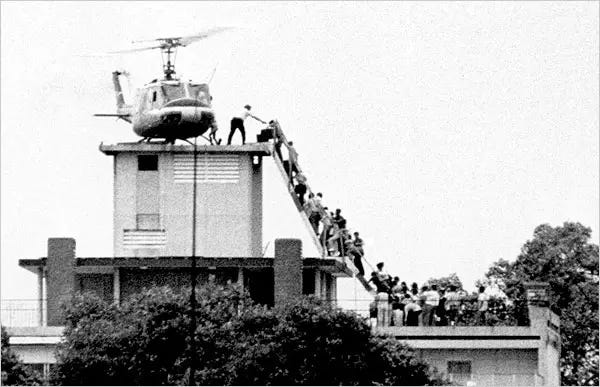
With the summer lull, the Danube Institute has taken the opportunity to do some welcome spring-cleaning. Removing its library of books, getting rid of unnecessary desks, stationery, computers and recording equipment, and of course the many Fellows who were cluttering up the place.
To mark this reconciliation of the ledger, next week we will run an exciting Countdown List Special to cap off the half-year, after which we will report from the annual Tusványos Festival in Transylvania, where may be found many a Lion In Winter.
Then, Based In Budapest will join the parasol hordes on holiday in August, before making a spirited return in September — potentially as spirited as that of Our Lord And Saviour from the cave.
We have one more Secret Project X lined up for the autumn — a big one — but more on that in time. For now, please enjoy your last dose of Business As Usual.
Around Town: Secret Society Special
To Italy, for secret society duties. Every year, an annual gathering of the shadowy conservative elite takes place in a different location, organised by a self-selecting band of academics and thinkers, who want to talk about The Future of Conservatism. It’s the closest Europe gets to an Owl Ceremony. Originally held in a castle from whence it takes its name; this year, held in Brescia, at a vast villa that spoke of the rusted grandeur such a cabal demands. The room service was OK too.
Its attendance list is a closely guarded secret, and we are sworn to omertà on what happened to the owl, but BiB can at least reveal certain elements in a wicked whispers style.
Which rising star of the British right confessed that there had been ‘about 15 Zoom calls in one day’ to work out Rupert Lowe’s position on the Clacton by-election?
Who was the twinkly-eyed boat-stopping Anglo who kept a baby with him at all times? This sinister mastermind later revealed to BiB that: ‘Having a baby gives you an excuse to duck out of all kinds of boring talks’.
Which fast-talking ex-Downing Street advisor scandalised some of the Catholic contingent with his sincere belief that ‘teenage pregnancy is good actually’?
Which frighteningly young Trump-aligned think tanker confirmed that DC is pretty pissed off with the Hungarians right now?
Which self-assured Austrian politician told BiB that our attempt to explain the Ukraine War from a Realist perspective was “a very poor answer”?
Which monastic former Foreign Legion operative was baffled by being introduced to the concept of Mr Beast and needed multiple explanations?
Which vaguely piratical research director found himself ballroom dancing with another bloke, as the event’s sex ratios hit the buffers?
Which Thatcher-loving law-giver blamed a bad back for skipping the dance tent?
Which member of a prominent Austro-Hungarian monarchy admitted that he scheduled regular evening time with his family to talk about the history of their ancestors?
Which Carlyle-loving Californian software developer nearly made us miss our flight back when his anecdote overran by 25 minutes?
Which door-hating Bitcoin billionaire spent much of his evening chatting to an uncancellable waspish homosexual history don with a passion for the Tudors?
Great, it was.
Enoch Powell is constantly having his ‘legacy reassessed’, because the British media is far too squeamish to just come out and say ‘he was right on immigration’. No one ever tries to ‘reassess’ Powell’s commitment to Ulster Unionism, do they?
Well, thanks to a recent DI event, the legacy has now been firmly assessed, and hopefully that will be the end of that.
The jury in this trial was all-star: Simon Heffer (his biographer and friend), John O’Sullivan, Tim Montgomerie, the laughing lord Maurice Glasman, David Oldroyd Bolt and Richard Vinen, a professor at King’s College London.
At the time, our former fellow Alexander Pelling-Bruce, who organised the event, recorded it on his phone.
One thing has since lead to another: we have been gifted that recording, and decided to put it out as a podcast.
Unfortunately, as a phone recording, the audio quality was not great. We’ve used all the studio trickery in our arsenal; the reconstruction was intensive: a bit like putting Cheddar Man back together. Apologies for any artefacts that still linger.
Elvis-adjacent DI fellow Sean Nottoli is off to Taiwan for the summer — he’s going to be looking at their military installations, with permission of course. Before he left, Sean was interviewed by the Korea Times about military procurement. It seems the Koreans have just lost a big manufacturing contract for Canadian defence on the grounds of inter-operability issues. He advised them to just bite the bullet, so to speak, and line up with NATO standards:
"If Seoul wants to become a major supplier within NATO, it should continue investing in joint production, licensed manufacturing, technology sharing and industrial partnerships with its North American and European allies, rather than viewing exports as one-time transactions.”
Crusade-positivist Raymond Ibrahim is eagerly awaited back in Budapest, having spent the month taking care of business in California (“I really needed to clean my swimming pool”).
But while he checks on his dog, workaholic Ray has kept YouTube fed and watered with regular videos. Last week, he made something of a splash by translating the Egyptian football team’s pre-match locker room prayer — and, as YouTube would have it, “You Won’t BELIEVE What They Said!”. 200 000 views and counting.
Paper Of The Week
Conservatism in The Anglosphere: A Tour d’Horizon
David Oldroyd Bolt & Daniel Hannan
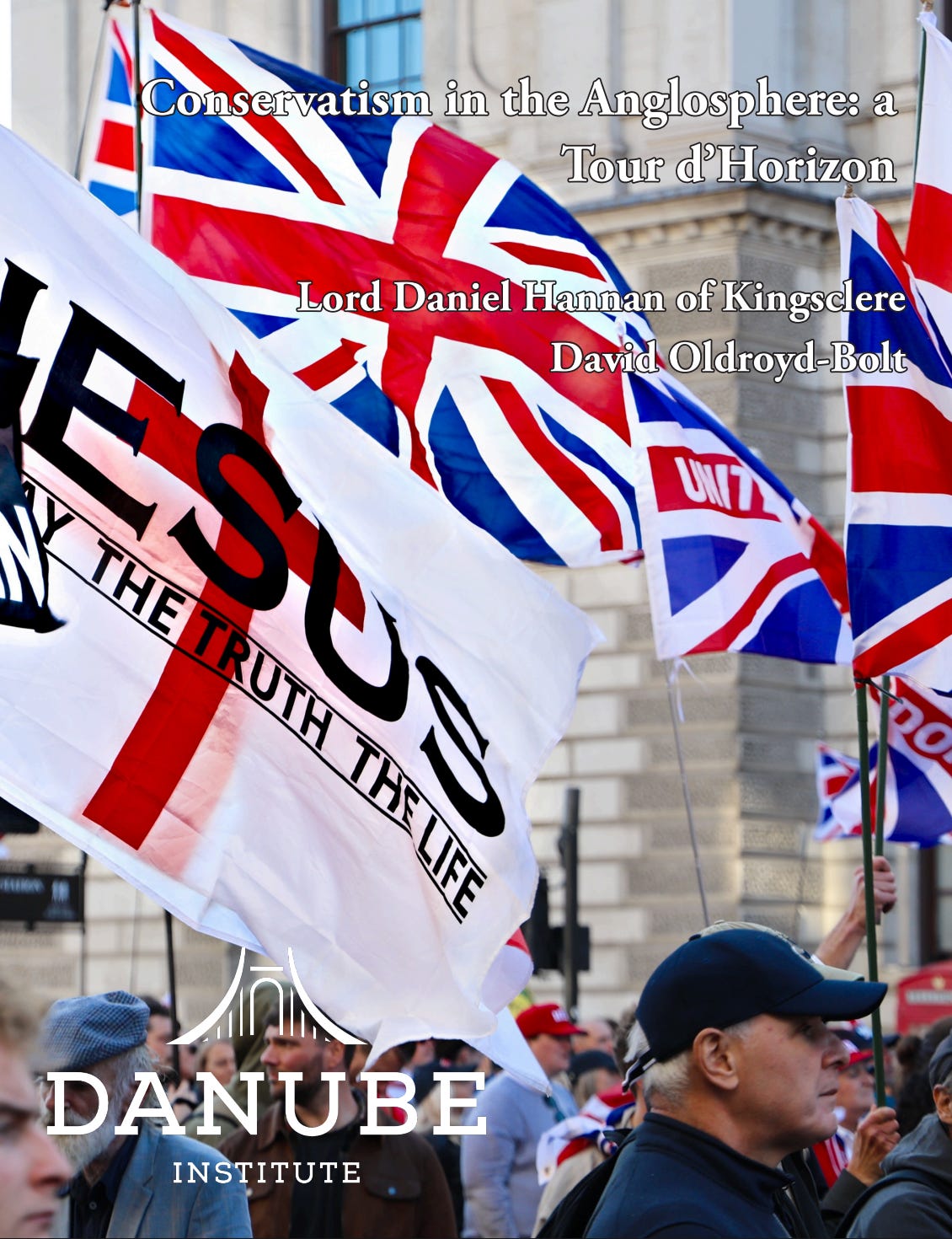
David Oldroyd Bolt plus Daniel Hannan is a dream team you could put straight on stage in a Gilbert & Sullivan operetta.
But rather than punch out Pirates of Penzance, these two models of the modern major-general have collaborated on a new paper: a tour d’horizon of Anglosphere conservatism.
Synthesising recent developments in Conservative thought from New Zealand to Canada, they build to a mixed picture — the brio and hazards of populism, and the sense of MAGA as both stabiliser and deadweight on the wider Anglo tribe.
By the end, the horizon has been so comprehensively toured you’d think they were Japanese pensioners.
***
The current Prime Minister, Christopher Luxon, a former Air New Zealand chief executive who had been in politics for barely three years, led the National Party to victory in October 2023, forming a coalition with both the libertarian ACT party and the populist New Zealand First under Winston Peters. Like Nigel Farage, a veteran populist politician, Peters is one of those political figures who thrives despite commentators avowing repeatedly that he is finished. He is sometimes compared to Trump, but this misses the essential point: Peters is a coalition pragmatist of the first order, a man who has served in government with both National and Labour and who understands how to acquire influence without assuming sole responsibility for what influence produces.
***
The result was striking precisely because the [Canadian] Conservatives performed so well and still lost. Despite gaining 41.3 per cent of the popular vote, they failed to secure a majority of seats. Poilievre lost his own Ottawa seat that he had held for twenty years. The strategy of absorbed insurgency had left the party populist enough to repel moderate voters during a crisis that demanded reassurance, but insufficiently populist to construct the durable coalition of the discontented that Trump assembled in the United States. It had, in effect, produced the worst of both worlds.
***
Although the MAGA example has been genuinely influential across the Anglosphere, its influence has been mediated by local conditions in ways that produce importantly different outcomes. In Canada, the MAGA aesthetic worked domestically until Trump himself rendered it a liability. In Australia, it has operated less through institutional channels than through the normalization of a style of politics that has benefited One Nation far more than the Liberal Party.
In New Zealand, the influence is visible in Peters’ pandemic-adjacent rhetoric and ACT’s ideological radicalism, disciplined by coalition institutions that impose obligations. It is perhaps in Britain, with Reform UK, that we see the most direct beneficiary of the Trump model. Nigel Farage understood, before almost anyone else in the United Kingdom, that the appetite for disruption on the right was real, large and very largely unserved by the Conservative Party.
Coming

“Az erősebb kutya baszik.”
The stronger dog gets to mate.
(Might makes right)