


Are you going to ARC bro? You gonna be at ARC yeh? You ARC’ing it up?
This Tuesday, Wednesday and Thursday, the massive spectre of the Alliance for Responsible Citizenship will be hovering over London’s Olympia Exhibition Centre like a boat 300 cubits long, 50 cubits wide, and 30 cubits high.
ARC has become must-do stuff for anyone Conservative, Con-Curious, or just Con-Questioning. It’s the see-and-be-seen Ascot Ladies Day to the Con calendar, somewhere between a high school social and a trade show for Edmund Burke salesmen.
Set up by the likes of Jordan Peterson and Dark Money Kingpin Sir Paul Marshall, ARC extends itself from the proposition that we can’t ask what is to be done until we’ve honed in on the deep diagnosis of what went wrong.
Accordingly, Day 1 is themed around The Pathway to Deconstruction, Day Two is Mindset Shift, and Day Three is The Age of Reconstruction
The Danube Institute is hosting a breakfast panel on Wednesday morning, at the Garrick Club, on ‘The State of Conservatism in the Anglosphere’.
It features:
Lord Hannan of Kingsclere (now executive director of the IEA)
Prof Steve Davies (IEA)
Dominic Armstrong (IEA)
Tony Abbott (wombat anthropologist)
Michael Stutchbury (Centre for Independent Studies, Australia)
John O’Sullivan (law giver)
Unfortunately it’s already sold out. But the DI team are around all week, somewhere between the buffet tables and the bogs. If you see us, do hit us up.
Hungary Helps and the future of aid for mid-ranking powers: after Daniel Farkas’ paper comes Daniel Farkas’ talk, this Wednesday, from 5:30PM at the Villa.
https://danubeinstitute.hu/en/events/central-european-development-aid-in-the-age-of-resource-scarcity-challenges-and-opportunities
In 2012, when BiB first went to Tirana, Albania, they were still whipping the donkey carts round Skanderbeg Square, the big central roundabout that defines the city. The Internet seemed to be powered by rotating hamsters, and they had an entirely fake Marks & Spencer store in one of the few central malls.
When we returned in 2021, the roundabout was pedestrianised, foregrounded by a giant LED screen broadcasting a Vodafone billboard, beneath which sat a Scandi-minimalist coffee shop. The donkeys had been sent to the sandwich-makers, and the streets were instead full of mid-priced European saloon cars.
Life comes at you pretty fast when you’re an EU-peripheral state specialising in sending remittances back from the West.
So can the unthinkable now be thought? Is a one time sump for Europe’s crime gangs ready to become a model citizen in an expanded EU?
And what about Montenegro? In some ways already a model candidate — but can Serbia’s coastal access become folded into the European Union, given that country’s Russian alliances?
Up at the Hungarian Institute for International Affairs, they’re not afraid to take on the big topics. And they’re also pretty OK with taking on the smaller ones, like this.
Join them, Wednesday, 24 June, 4PM, for HIIA: EU Enlargement on the Horizon? Montenegro and Albania on the Road to the EU.
Around Town
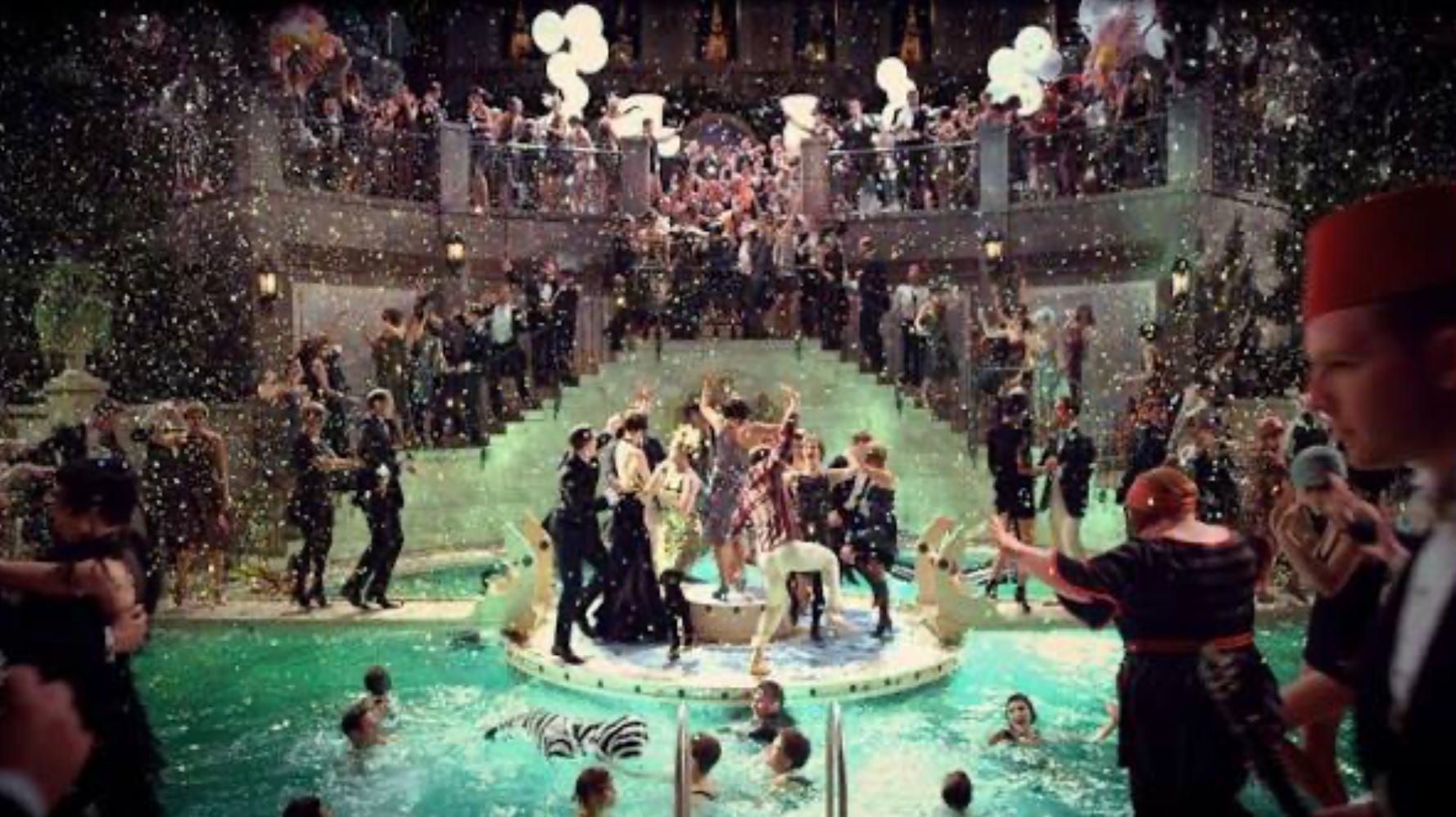
La Grande Belleza is one of only two films of true artistic significance released in the 2010s — the other being Charlie Kaufman’s Synecdoche, New York. La Grande Belleza (‘The Great Beauty’) is by far the more uplifting of the two.
It is the tale of a few months in the life of an Italian roué as he tries to keep his mojo together. It is also the greatest ad Campari never shot, a camera devoured by Rome in all its libertine eternity. Imagine the Clockwork Orange eye-scraping scene, but for beauty. By the end, they had to peel us off the seats.
Gorge on it at the Bem Mozi, tonight, 6:15PM till 8:40PM.
The only World Cup game worth watching this week is Scotland vs Brazil. Midnight, Wednesday.

Actually, Norway vs France should be a laugh.
9PM Friday.

If you want to be surrounded by boozed-up strangers throwing their pints in the air when a Haaland projectile breaks a million French hearts, a great place for that is Szabadság tér, near Parliament, where they host the ‘Belvárosi Foci Mozi’. It’s yer standard ‘hip European capital public LED screen’ do. Free, of course.
Say what you like about the Soviet Union, but they did pass the ball when they could have kicked it.
The first Hungarian in space was in 1980 - Berlatan Farkas — and he was already the 6th Warsaw Pact person to be given the opportunity (the first non-Russian was a Czechoslovak).
Yet despite being part of the American empire for 45 years, the first Brit in space came in 1991 — and she only did it via the Mir space station route.
Hungarians have a special affinity for space, boosted by the exploits of compatriot Tibor Kapu on the Axiom mission just last year.
And what with SpaceX making space cool again, this is a good time to check out Destination: Galaxy, an exhibition examining our sci-fi dreams and the reality we forged from them.
It’s up at the BTM Castle Museum, in the Castle District, Szent György tér 2, till the end of July.
John O’Sullivan has had enough.
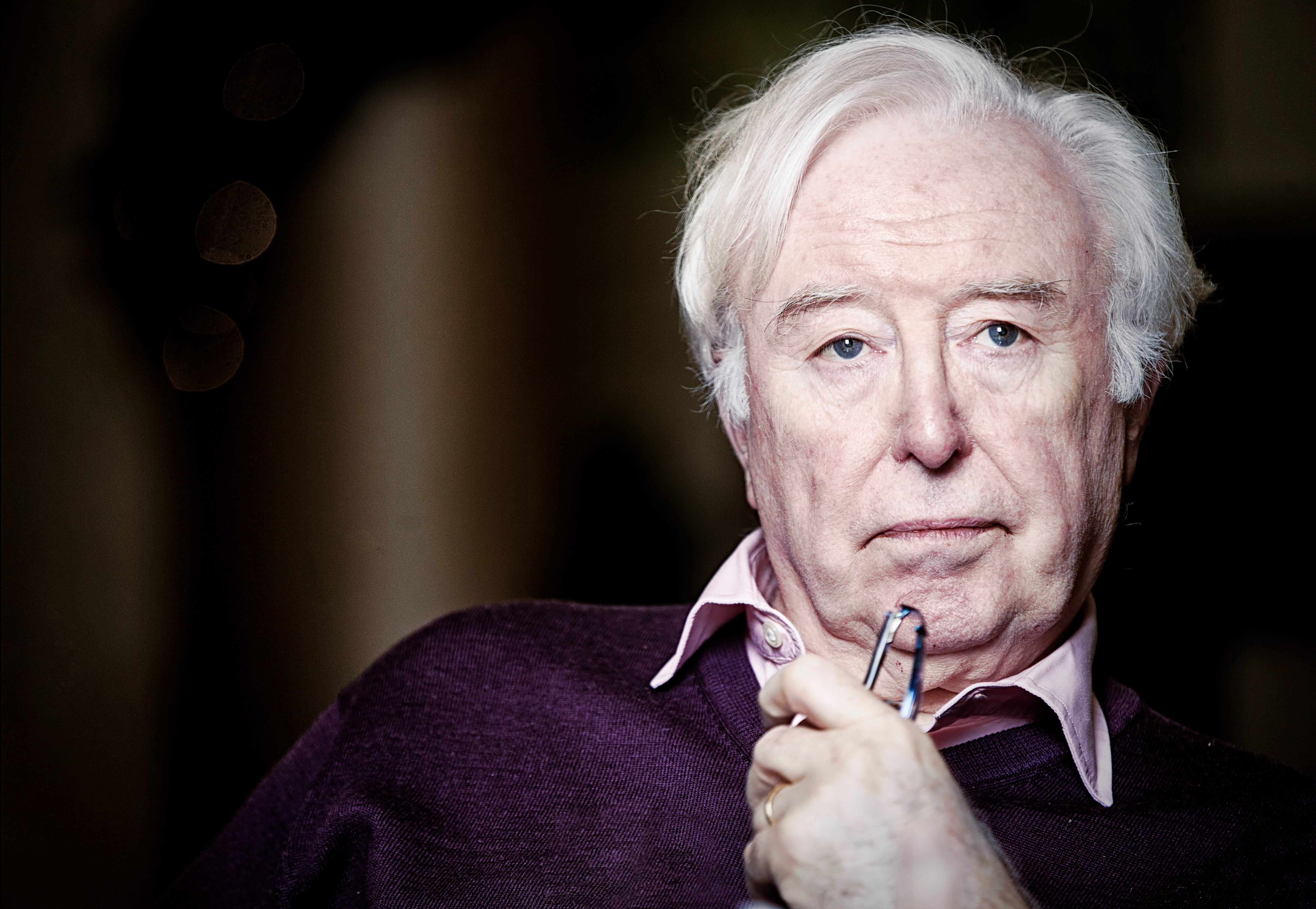
Insofar as John O’Sullivan can have had enough, of course, being always dapper, urbane and thoughtful. Still, righteous anger has to come in some form, and in John’s case it has come in the form of an urbane and thoughtful open letter, published this week on the DI’s website, and on its X account.
John is absolutely hopping (in a reasonable, polite and very lettered way) because the DI’s critics have been out in force since the change of government; many of them quite sloppy with the actualité.
After eight weeks of maintaining a dignified silence, a decision was taken to correct the record.
To nutshell it: various leftist journalist have claimed that there is no evidence of people doing things at the DI - that the Institute itself is a mysterious white obelisk on a hill (yet simultaneously is also a brutally efficient outrider for Fidesz).
We have certain issues with this characterisation. Certainly, as can be evinced from their recent attempts to backwards-induct the Institute’s internal payments system by guess-matching various Freedom of Information requests, these are not what you would call investigative journalists. As also evinced by their failure to just check out our website.
In the letter, John very patiently (but surely inwardly boiling over? - Ed.) lists how the DI works, what it does, what it has done:
404 public events, conferences, lectures, and panel discussions, most of which are available to review on Youtube.
Produced approximately 198 podcast episodes featuring leading scholars, journalists, policymakers, and public intellectuals.
Published 243 research papers at an average rate of roughly one per week in recent years.
Welcomed 86 Resident and Non-Resident Visiting Fellows from Europe, North America, Australia, Asia, and beyond, from anything from a few weeks to several years.
Produced two documentary films, on migration, and on Hungarian culture and identity.
Maintained a vibrant internship programme, bringing in up to 30 young people a year to serve in and support our research, comms, events, and operations departments.
We also informally publish a popular Substack, Based in Budapest, tracking the life of Budapest as s a centre of conservative life and culture. [HEY THAT’S US!]
He goes on to tackle the political independence question.
In reality, our fellows and contributors have expressed a variety of perspectives on that conflict, as they have on many other subjects. For evidence, look no further than the film, Erase The Nation, made with Institute funding by our Visiting Fellow Tomasz Grzywaczewski, a Polish war journalist. His piece is sharply critical of Russia in almost every dimension. Or go back to the video of our 2014 conference on Ukraine, held jointly with the Hudson Institute in Washington, which critically examined the first stages of Russian military intervention in Ukraine. Or consider the several major speeches by former Australian Prime Minister, Tony Abbott, who as a fellow was consistently hostile towards Putin’s war.
Much else is covered. The letter clocks in around 1700 words, and yet never outstays its welcome. It already has 70 000 views on X: definitely worth reading in full. Link below.

PAPER OF THE WEEK
A Study in Strategic Empathy: A Critical Exploration of Mainland Chinese Legitimisations for a Taiwan Scenario
Eric Hendriks
Empathy is hard. Nicholas Elpley’s excellent short book, ‘Mindwise’, about the phenomenon of empathy, concludes that empathy is not really inbuilt, and it actually conveys no particular level of predictive power. I might sense that I ‘empathise’ with you, but that doesn’t mean I’ll be able to say anything useful about your next moves. Even highly romantically-involved couples with long marriages offer little better than a coin-flip chance of being right when posed predictive questions about their other-half.
In short, he says, if you want to know about the internal states of others, you should simply ask them.
So it is with dapper don Eric Hendriks’ new paper, on China’s case for taking Taiwan. While Western geopolitics guys draw baroque squiggle maps of what China would do in Case 1(a) Part (c), Hendriks is more interested in simply interrogating the CCP’s own literature. What do the Chinese say they want, and what does that infer for the rest of us?
The result is less another materiel abacus lesson, more a journey into Chinese theory-of-mind. We might not like what we find. But we are foolhardy to ignore it.
“Yet, despite this darker history, the dualistic pan-Asian conception has returned with force in contemporary mainland China, albeit under new names and in subtly modified forms. In various iterations, it plays a prominent role in CPC doctrine, education, and academic political philosophy.
The application of the Pan-Asian duality to Taiwan is readily apparent, even if Chinese thinkers are typically too discreet to spell it out: China must liberate Taiwan in the name of global harmony, freeing it from the grip of Western hegemony – a hegemony that, by separating Taiwan from China, seeks to obstruct the emergence of a world of harmonious coexistence.
In Jiang Shigong’s application, “The Taiwan question is a contest between two civilizational forces in Asia whose outcome will influence the future of human civilisation.” For Jiang, China carries a harmonious socialist culture into the world, while the resistance comes from the United States, the “new Roman Empire”, with its imperialist spirit of domination.
Thus, according to Jiang, the PRC must incorporate Taiwan into its sphere of governance and culture for the sake of humanity as a whole.
This style of East-West thinking about Taiwan is highly polemical and readily lends itself to use as a resource of legitimation in the event of a concrete, perhaps even coercive incorporation of Taiwan by the mainland, which is probably precisely its intended function.”
"Bagoly mondja verébnek, hogy nagyfejű."
The owl tells the sparrow that it has a big head.
(The pot calling the kettle black)