

Events This Week
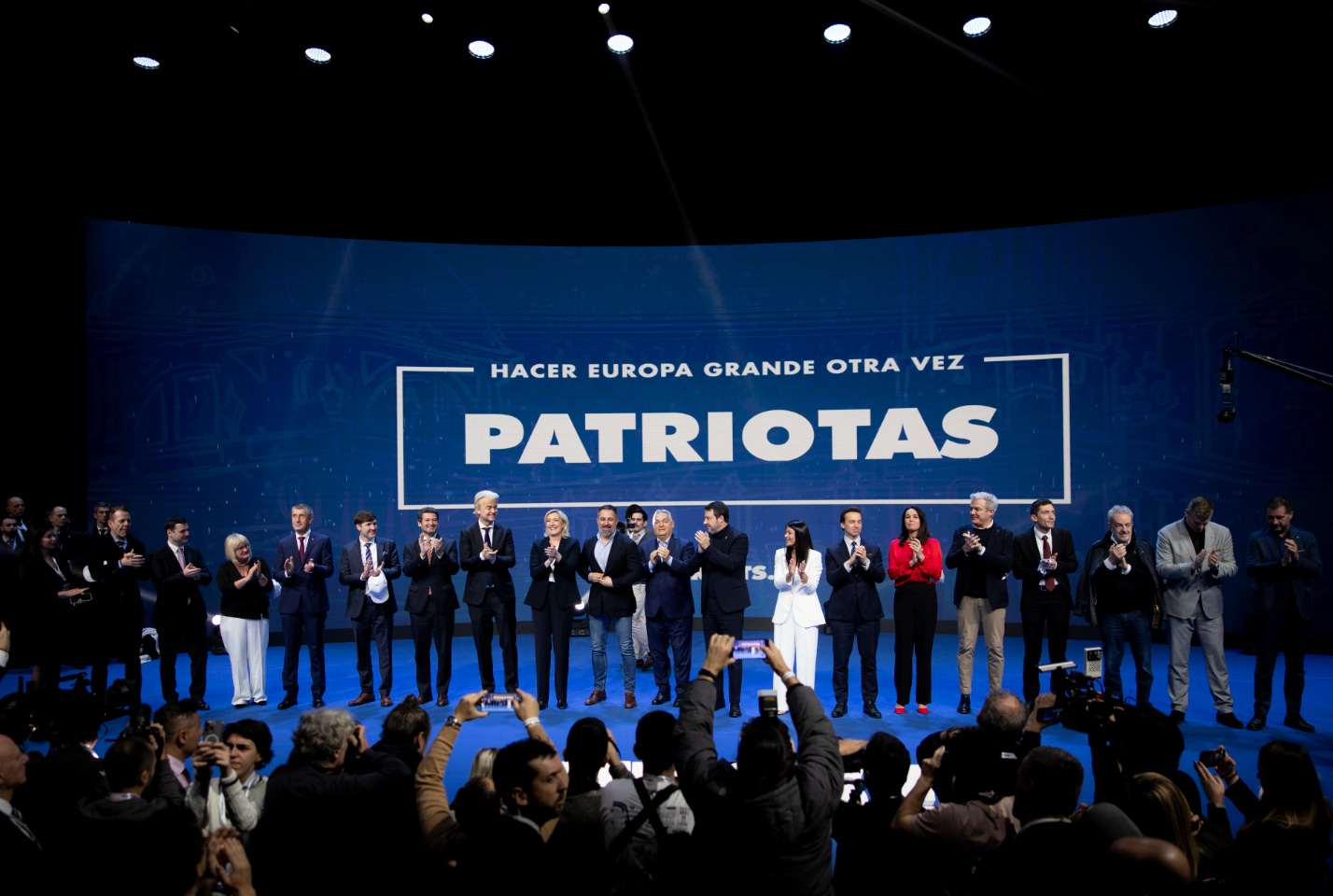
If CPAC didn’t quench your appetite for red meat, then the lineup of The First Patriotic Assembly is a mammoth’s worth of carne. Czechia's Andrej Babiš, ice cream-haired Geert Wilders, cat fancier Marine Le Pen, Herbert Kickl, leader of Austria’s Freedom Party, Santiago Abascal, head of Spain’s Vox, and Viktor Himself. It’s Anne Applebaum’s cheese-fuelled nightmare, and it’s really happening: at Millenáris Park, today, 10AM-6PM.
The death of Len Deighton got Based In Budapest thinking about literary fashions. Deighton wrote some of the greatest spy thrillers — snappier than Le Carré. In the ‘80s, his paperbacks adorned every airport lounge. Then they fell from favour. His passing, at 97, seems to have jolted him back into the popular memory.

In The Seven Books That Everyone Once Read and No One Now Does, Dr. Nicholas Tate takes a longer view of that same question. Walter Scott was once the Alasdair Maclean of the 19th Century — every schoolboy’s favourite ripping yarn merchant. Skip back a couple millennia and Cicero’s On Duties was prescribed reading for young men on the make. These and others come under discussion, as Tate seeks to remind us of all the treasures we forgot to remember.

4PM. Wednesday, at MCC.
Do you yearn to ‘map the emerging fault lines of the global migration shockwaves’? Sounds like To Greener Pastures – and Back: A Global Outlook on Migration would be perfect. 4PM tomorrow at the Villa.
Plug time: please do come along to the Danube Institute’s two-day Family Conference next week Tuesday-Wednesday, 1 and 2 April. Family comes first, after all.
Sir Nick Gibb was perhaps the most consequential Tory in the dismal government of 2010-24.

As Schools Minister, Gibb didn’t believe in the educational establishment’s vogue for teaching reading by ‘the searchlights model’: in which children would be given the entire word, and have to memorise it, like Chinese ideograms.

So he pushed for an older system — phonics. Recognise the particle of a word: ‘th’, ‘ough’, ‘ie’ — and use these building blocks to pronounce the whole thing.
That one change has radically improved reading comprehension in schools, saving many now-adults from functional illiteracy.

On Wednesday at 5PM, he’s talking over what he learned with the functionally literate Calum Nicholson, and János Setényi, Head of the MCC Learning Institute.
Around Town
Perspectives and people from the week

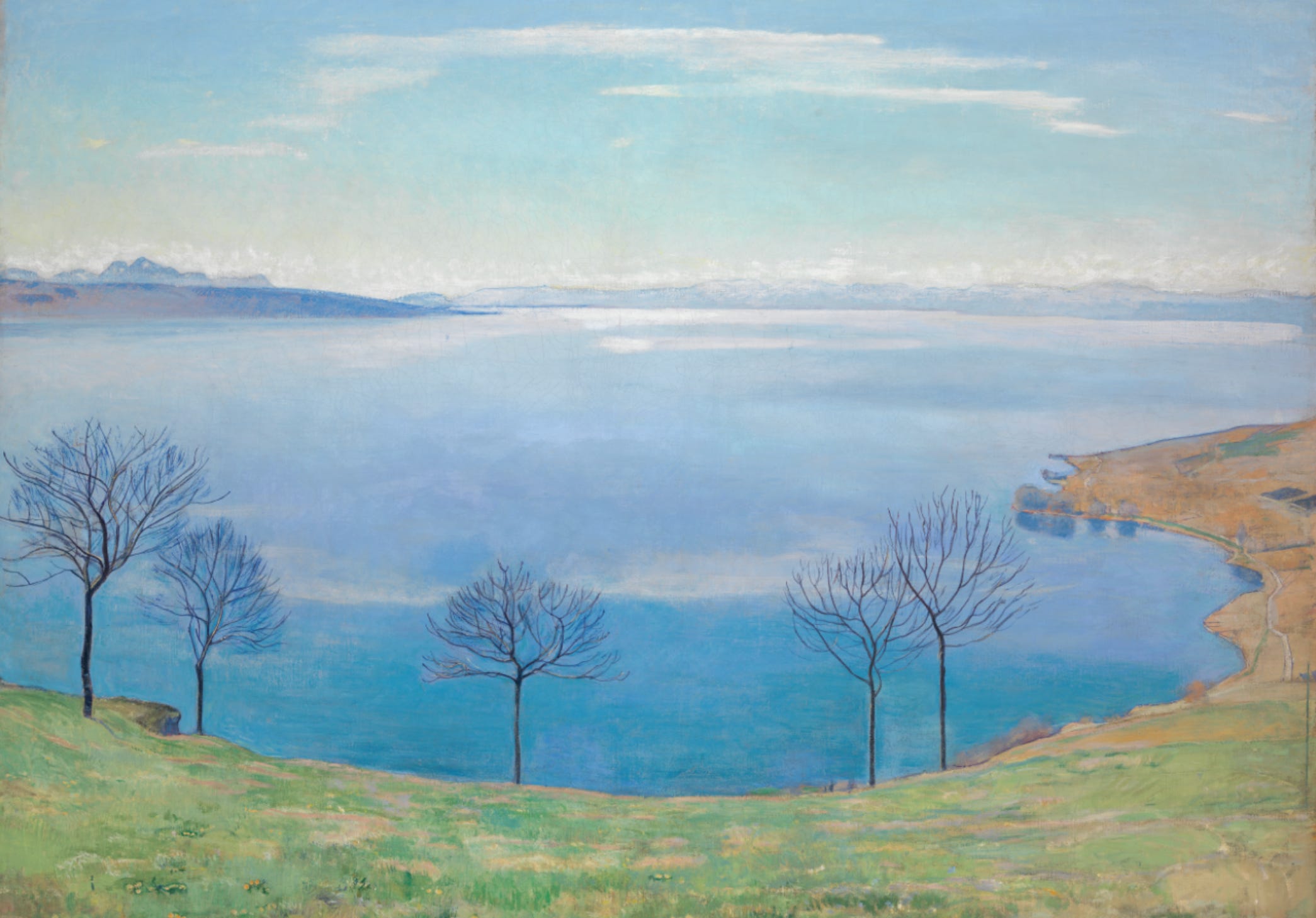
Some very fine art going on at the Museum of Fine Art. Masterpieces of Swiss Art from the Christoph Blocher Collection brings together works by Ferdinand Hodler, Albert Anker, and several others.

Anker is best known for his adoring, luminescent portraits of children. Hodler is perhaps the opposite - starkly beautiful landscape scenes in the Swiss mountains. He happened to arrive on the scene at the moment when various viewpoints were suddenly becoming accessible via railway, and took full advantage, working in idyllic solitude far from popular tourist sites.

Tickets are 6200Ft and the show runs until the 21st of April.
1989 was an extraordinary year in Hungarian history — unless you were 18 and just wanted to party. That’s the setup for Moscow Square (2001), a Hungarian film that takes the events of ’89 as its background for the story of a group of teens only looking to pass their finals and finally get rid of the V plates. Dazed & Confused meets Goodbye Lenin? That's the tantalising hybrid at MCC’s Film Club, Kino Café, István korut, 6PM tonight.
Last week, the EU activated the 'rapid response' clause of its Digital Services Act in Hungary. The DSA, an elephantine web of internet safety laws, is designed to stamp out 'disinformation'. The regulations will stay in force until one week after polling day. This comes on the back of unsubstantiated claims of 'Russian election interference' that have swept Hungarian media in recent days.

Thomas Fazi, of MCC Brussels, has been tracing the familiar narrative of interference in his latest piece for Compact.

These accusations carry real consequences. They allow Brussels to engage in its own forms of electoral interference, weaponizing locally embedded, EU-funded NGOs and media outlets to amplify establishment narratives while using the Digital Services Act (DSA) to silence critical voices and steer outcomes towards “their” candidate. As I have noted previously, since the DSA came into force in 2023, the Commission has pressed platforms to adopt heightened content moderation measures ahead of elections in Slovakia, the Netherlands, France, Moldova, Romania, and Ireland, and during the 2024 European Parliament elections.
GipsyFest, the festival you didn't know you needed, is happening Thursday till Saturday, on Margaret Island. Evening concerts, showing off the best of Roma folk music and art. Tickets are 10 000 Ft but requesting Volare voids them.
The Future of America's Alliances is Industrial says Sean Nottoli, in National Review.
Paper of the Week
Salonfähig: The Mainstreaming of the Freedom Party
of Austria
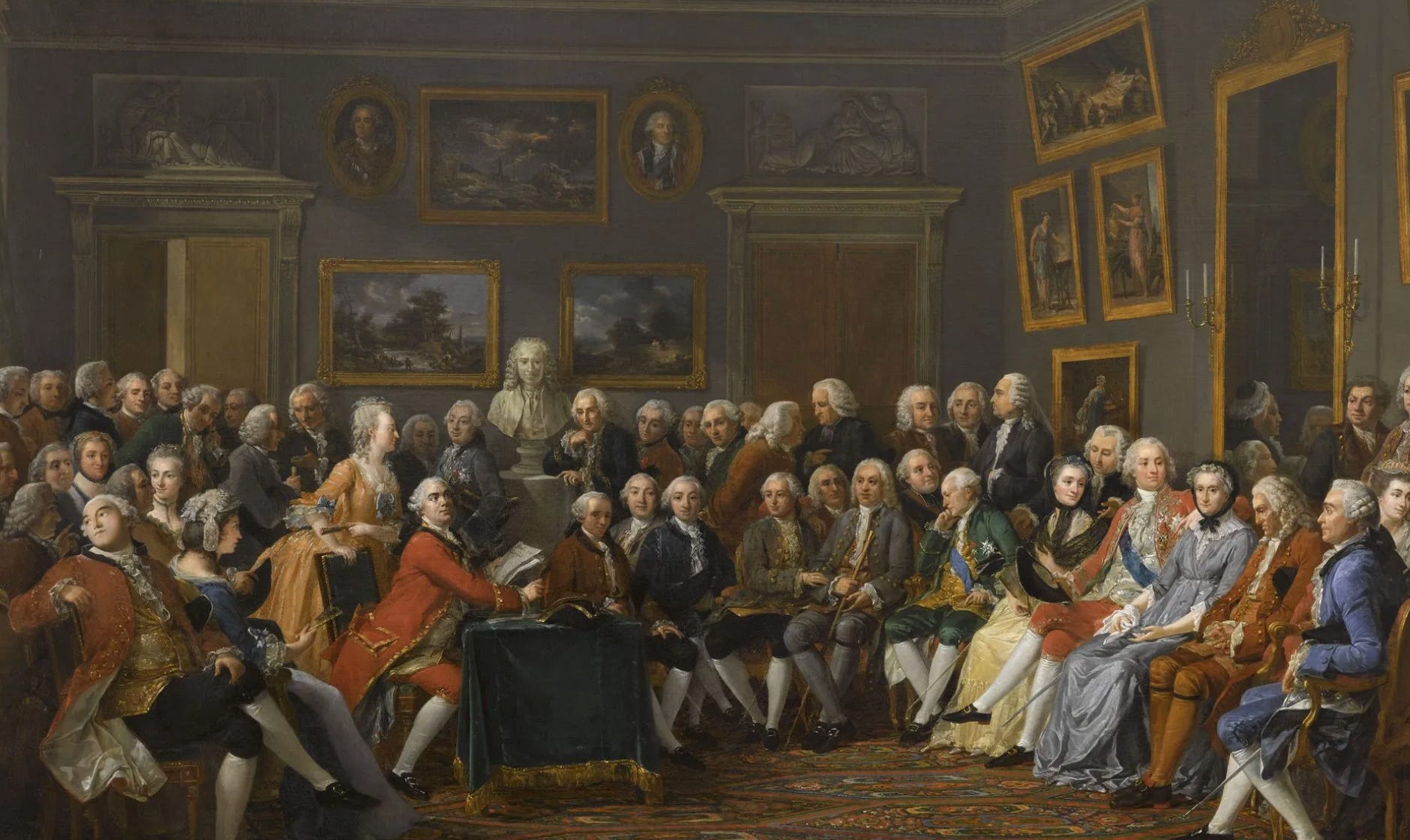
Austria is still an enigma. A neutral state. Occupied by the Soviets - then somehow given its liberty. Nazism's 'first victim', or its first collaborator?
And the first state in Europe to see the rise of hard right politics in the form of The Freedom Party.

In the immediate post-war, a severely divided electorate was bound together by an act of political genius called proporz: a system of power-sharing, in which the Christian Democrats and Social Democrats doled out ministries to each other in a Grand Coalition, even down to local level.

But the cosy consensus politics began to fracture in the 1970s, as DI Visiting Fellow Stefano Arroque explains, when the Freedom Party broke through. Best known for its charismatic possibly-gay '90s leader, Jörg Haider, the Freedom Party put immigration on the table in a way that was at odds with the tone of the times.

Initially, that meant isolation, a cordon sanitaire. But the cordon has broken down in Austria in a way it has not yet in Germany.

Arroque explains the transition in terms of the Austrian sense of Salonfähigkeit - salon-worthiness, clubbability. His paper considers the VPÖ's many small steps toward respectability.
Haider’s leadership closed a chapter of national liberalism in the history of the FPÖ. The party’s new platform, heavy in a kind of nation- based or outright nationalistic language not seen in Austrian politics in at least three decades, focused on issues such as migration, culture and security rather than economics or individual liberties.

The Carinthian’s success was immediate: within months of his leadership, the FPÖ nearly doubled its vote share in the National elections, albeit returning to the opposition as Vranitzky refused to work with a more nationalistic FPÖ. Less than three years later, the FPÖ achieved unprecedented success in the elections for the Carinthian Landtag, securing a narrow majority with the ÖVP.

Carinthia, despite still using Proporz rules for the composition of the cabinet at the time, reserved to the Landtag the right to elect – and depose – the Landeshauptmann by simple majority. With an agreement reached, Haider was inaugurated as the FPÖ’s first-ever Landeshauptmann.
Comings & Goings
Going
Father Mario Portella has been a Visiting Fellow for six months, and is ending his term just before Easter, in time to nip back to Florence, where he has an ecclesiastical base. Father Mario is widely loved for his gangster chic cigars, his firm opinions on Vatican II, and his elliptical historical tangents. Having a priest as a friend and colleague turns out to be pretty cool. He has promised us all a discount on future christenings. And maybe even an indulgence or two if you see him round the back…
Dates For Your Diary
Family Formation and the Future, Budapest — 1–2 AprilNatCon Brussels — April"Amit Jancsi nem tanult meg, János fizetni fog."
— What Jancsi didn’t learn, János will pay for. (Jancsi is the diminutive of János — in other words, the boy who doesn't form good habits will reap the downsides in later life)
FRANCE IS COMPROMISED, FRANCE IS CURRENTLY HIDDING AN IDENTITY THEFT , FRANCE USED US AND CANADIAN SERVERS TO STEAL MY IDENTITY ON LINKEDIN TO COVER UP A MASSIVE INSIDER THREAT ON CAPGEMINI , THE ENTIRE SYSTEM IS COMPROMISED , ALL THE COUNTRY IS DIRECTED BY ONE MAN PIGASSE MATTHIEU,