

Events This Week
There’s a workshop on terrorism up at MCC, on Tuesday. Sadly, no pipe bomb tutorials, nothing on when the red wire must/mustn’t touch the blue wire. More of a strategic overview of the present situation, really.
It’s called Terrorism Without Borders: Europe in a New Era of Radicalisation.
2PM till 3:30PM.
Sign up here:
https://mcc.hu/en/event/2026-05-26-terrorism-without-borders-europe-in-a-new-era-of-radicalisation
Around Town

Belá Bartók is famous for his boulevard. But did you know he also wrote music? His only opera, Bluebeard’s Castle, about the uxorious Frenchman, is on at the National Opera. It’s a special, cut-price ‘audiophile’ presentation: no full-on staging — instead, musicians popping out of balconies in traditional costume all around the auditorium. ‘3D’, they’re calling it.

In this Bold New Era of Change, the DI is unknotting its tie, embracing the Inevitable Hungarian Future. The Arc of History is a rainbow, folks — which is why we are happy to recommend Viktor Szeri’s dance piece Reigen.
The blurb says:
“With a sensual yet immersive approach, Szeri delves into the hidden realms of pleasure, sexuality, and nudity, challenging the social conventions and taboos surrounding the intimacy between men.”
So if you’ve ever been curious about the taboos surrounding the intimacy between men, get out of your local MEP’s office and into the Trafó theatre, 28 & 29 May, 8PM.
It’s hard to believe that eternal tweens Scooter are still busting out the schlock more than 30 years after they began. They’re now in their 60s, but expect candy-fuelled musical lobotomies, with added statins. Saturday, 30 May, at Budapest Park.
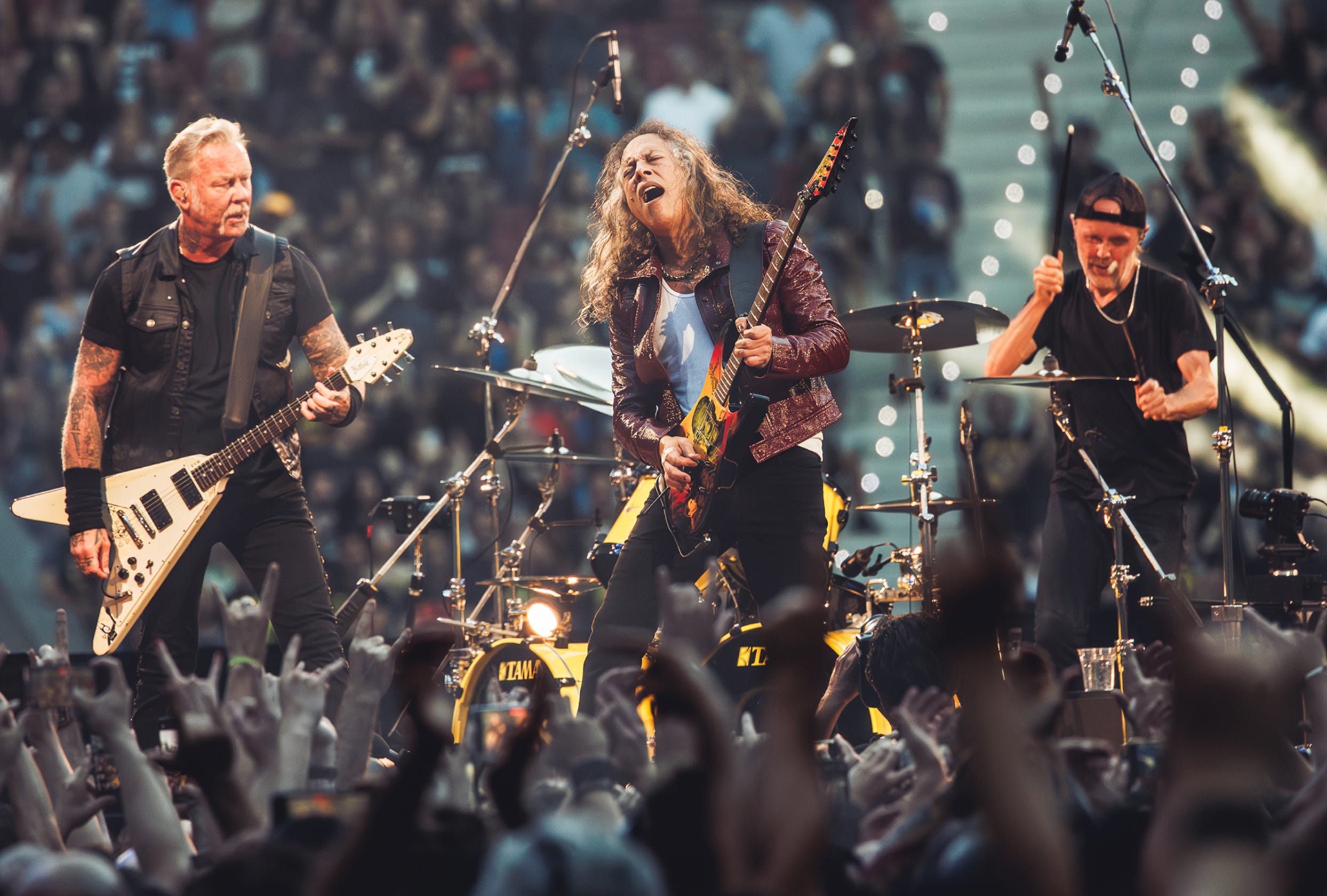
Summer time: when the great acts of the world descend on Budapest for their arena tours.
To get ahead of the Ticketmaster gods, here are some of the biggest of ’26:
Metallica — heavy legends and psychoanalysis’ greatest rebuttal — Puskás Aréna — 11 & 13 June. With Pantera supporting on the 11th.
Sting— tantric god and ex-copper - MVM Dome — 18 June
Scorpions — change-blowing spandex-rock - MVM Dome — 20 June
Empire of the Sun — Aussie electro-pop from Luke Hayes— Budapest Park — 7 June
Papa Roach — nu-metal’s middle child — 9 June
Mac DeMarco — definitive slacker rock of the 2010s— 23 June
David Byrne — autistic post-punk— 18 June
Primus — South Park theme-makers and ineffable weirdness — Barba Negra Red Stage — 4 August
Nagorno-Karabakh has been through its own Exciting Time of Change lately. In the aftermath of the 2023 war, won by Azerbaijan against previous holders Armenia, a formal peace treaty was convened by President Trump in 2025. That entails the building of a 40km road straight through Armenia, underwritten by a 99 year lease, held by the USA. A Danzig Corridor, if you will.
So does the seeming resolution of this bitter dispute also mean a broader geopolitical unlocking across the region?
Farid Shukurlu, DI Fellow, is sure it does — as he tells the latest episode of Danube Politics.
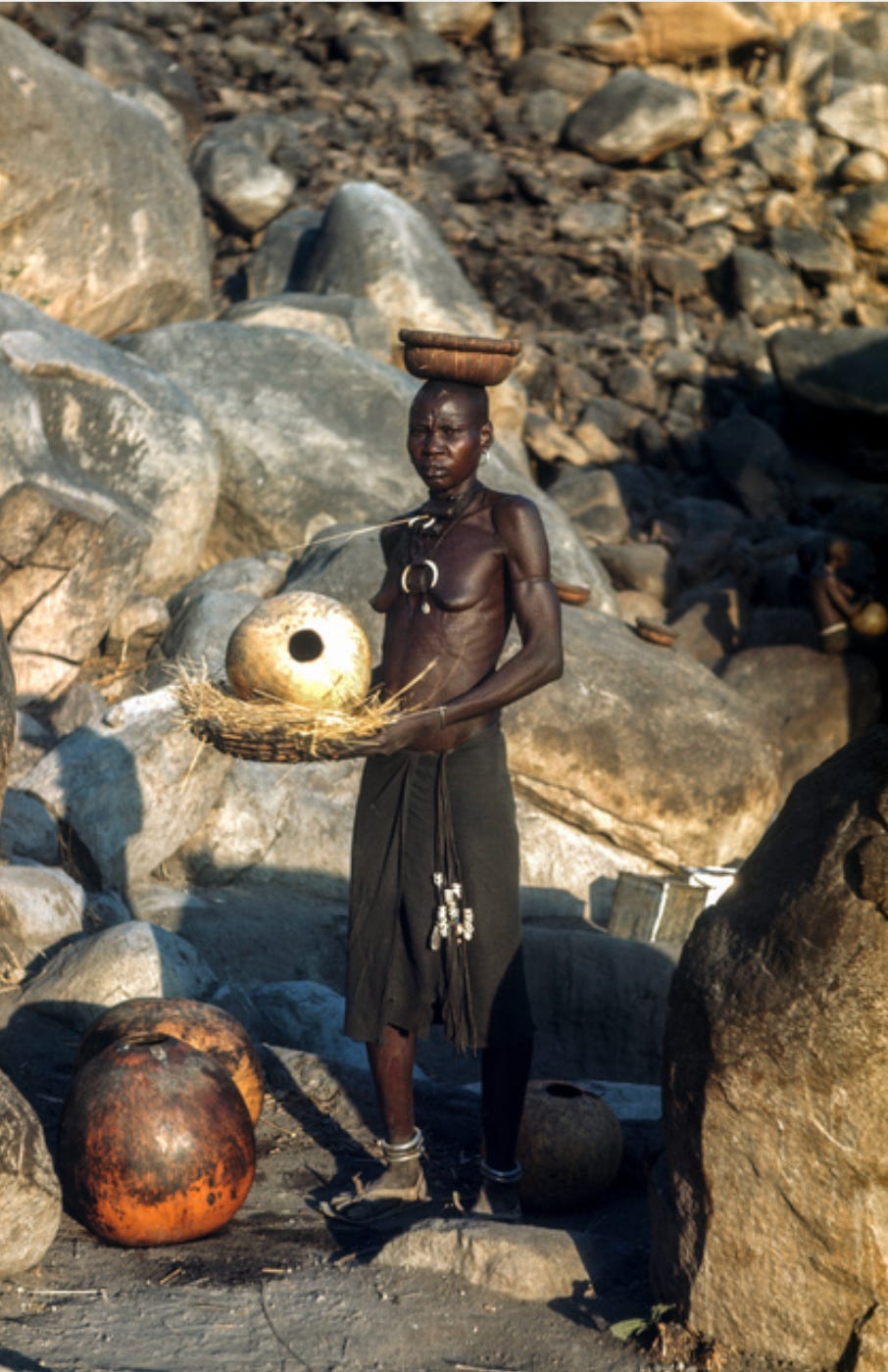
After the Second World War, a new style of ‘illustrated press’ reshaped the way we saw the world. Magazines like Life, Paris Match, and Holiday brought forth an age of Kodachrome colour. They sent snappers around the world to capture vibrant verité. Tribal dancers in the Andes. Lovers courting in Tuileries. Ceremonial baseballs being pitched in St Lois. Barbers in the Bronx.
One photographic agency, Magnum, was at the frontier of that revolution. Founded in 1947, its message to its photographers was simple: make life cinematic.
Now, their biggest early names: David Seymour, George Rodger, Werner Bischof, Inge Morath, and Robert Capa himself, are part of a new exhibition, Magnum Photos: Early Colour. It’s at the Robert Capa Centre. Ongoing, 1PM to 6PM weekdays, 10-6PM weekends.
Paper Of The Week
(Not) Rolling Out The Welcome Mat: Non-EU Migration in the V4
Michael O’Shea
“Nothing is so permanent as a temporary worker,” goes a quote attributed alternatively to Milton Friedman and Ronald Reagan.
Every Western European country has developed its own origin myth for mass migration. Waterloo Station now has a statue to the ‘Windrush Generation’. Germany believes it was rebuilt by Turks, rather than hardy Teuton engineers. National stories are being retrofitted to incorporate the haphazard policies of yesteryear.
Eastern Europe has none of this historical baggage. Its experience of migration remains recent and limited. Yet even here, the inexorable tide of humanity is beginning to wash in. Warsaw taxis driven by Indians. Budapest’s ubiquitous Wolt men.
Each nation in the Visegrád 4 confronts the same questions of identity and opportunity. Each is piecing together an answer in a different way.
Former fellow Michael O’Shea has decided to survey these differing responses in his excellent new paper:
The Czech government estimates the country’s Vietnamese community at 69,000, the third-highest foreign nationality after Ukrainian and Slovak. By 2011, “Nguyen” reportedly ranked as the ninth-most-common surname in Czechia, with over 21,000 holders.
Irrespective of political blame, scenes that would have been unfathomable a decade ago are proliferating across Poland. In 2024, a Senegalese man defecated in a reservoir, evoking widespread shock and social-media commentary: He was later deported. In April 2025, a Jamaican man stabbed and severely wounded a fellow passenger exiting a Warsaw tram. In July 2025, a Venezuelan migrant murdered a young woman in Toruń after a botched rape attempt. In 2024, camera footage showed an African man attempting to pick the lock of a parked car in Warsaw, climbing and jumping on top of others, and eventually assaulting a delivery driver on a motorised scooter. “Until recently, such scenes could only be seen in the countries of Western Europe,” wrote the staff of pro-opposition wPolityce.pl. This genre of news story, once enumerable by hand, is increasingly common.
Anti-migration political attitudes – particularly when excluding the special case of Ukrainian war refugees – are arguably just as firm in 2025 as they were in 2015, at the time of that year’s European migration crisis. The various types of legal and illegal migration inevitably make for a more complicated environment. Poland, with its large and rapidly developing economy, seemingly is becoming a desirable migration-destination country, in addition to one that sits at a critical geopolitical location. Hungary and Slovakia remain significant transit countries for migrants hoping to reach the wealthier countries of Western Europe. All four countries are juggling the needs of a modern economy with the haunting migration experiences of nearby Western Europe.
“Sok lúd disznót győz”
Many geese defeat a pig