

Events This Week

One of BiB’s favourite pieces of philosophical popcorn is Martin Heidegger’s concept of ‘Thrownness’. Once described as there being No Terms of Service for life: “You wake up in a moving train with a history and a culture already in progress, without having signed a contract or chosen your starting point.” Once In A Lifetime by Talking Heads also makes the point forcefully.
Heidegger was talking from a personal, existential point of view, but Thrownness turns out to be at the heart of many other debates.
Take constitutional law. America has an alpha point: its sacred constitution and the laws that flow from it. Britain has a thousand years of what this guy said to that king in 1215, and how the Speaker has just always sat on a woolsack. It has formed itself around the habits and history of the isle’s inhabitants, and what they thought a good life looked like — every new node forking off from a previous historical vantage point.
Hungary is aware of the tension. Like many a modern European state, it has a Basic Law, to which the newly elected must pledge allegiance. But the Constitution of 2012 also made room for the role of precedent in sculpting the finer points of its politics.
At MCC this Wednesday and Thursday, that balance is coming into focus. How much is a constitution ever separable from a people’s history?
Key speakers include Randy Barnett, Professor of Legal Theory at Georgetown University. And Harshan Kumarasingham, from the University of Edinburgh.
The show starts at 1PM on Wednesday, then continues Thursday morning till mid-afternoon. If your context is Budapest and your period is the mid-2020s, you may find yourself at Tas Vezér utca. Try to enjoy the ride.
June 10 at 3:30 PM - June 11 at 2:45 PM
Busy week for Randy Barnett — legal theorist, and a man whose porn star name is coincidentally the same as his real name. He will be back in action on Friday, putting forth the proposition that Libertarianism just needs a few tweaks. Libertarians have long struggled to explain how they would build nuclear power plants or stop nuisance phone calls. Randy recognises the contradiction, and wants to offer a synthesis position — one that updates the idea of voluntary private contracting for the age of supermassive technology.
https://mcc.hu/en/event/2026-06-12-libertarianizmus-a-gyakorlatban
10AM. MCC. Tas Vezér.
Last week, we brought you news of Simon Cottee’s paper for us on Jihadism and migration. How 45% of European jihadi plots contained a migrant.
The news detonated like a rucksack through the media — so much that we’re following up with an emergency panel seminar at the Danube Institute.
Wednesday. 5:30PM. The Villa.
https://danubeinstitute.hu/en/events/migration-and-jihadism-in-europe-since-2015-what-are-the-facts
Around Town
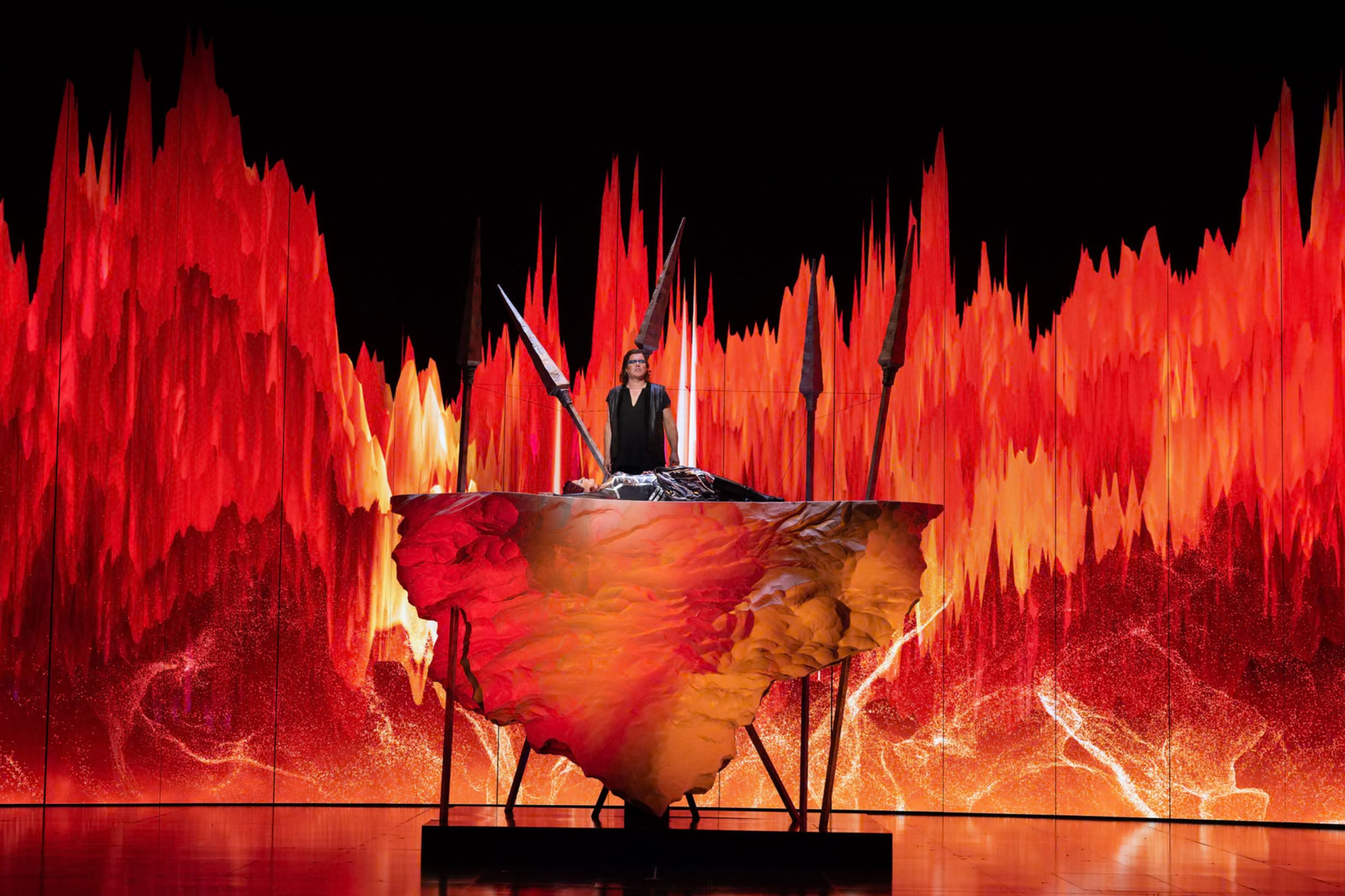
June is gay pride month in much of the West, but in Budapest it is Wagner Month at Müpa. Arguably more camp, certainly better tunes. Here, the Müpa orchestra will be pedalling through the entire Ring Cycle, a Tour de France’s worth.
It’s a concert-opera rather than a full blown horned-helmet and women-on-wires thing. You can get a season ticket to all four parts for around 80 000 Ft, which is a lot cheaper than signing up for a liberal arts degree, with basically the same effect.
They’re also doing it twice.
Cycle 1
* Das Rheingold — Thu 18 June, 18:00
* Die Walküre — Fri 19 June, 16:00
* Siegfried — Sat 20 June, 16:00
* Götterdämmerung — Sun 21 June, 16:00
Cycle 2
* Das Rheingold — Thu 25 June
* Die Walküre — Fri 26 June
* Siegfried — Sat 27 June
* Götterdämmerung — Sun 28 June

Tricky will be at Akvárium on Tuesday.
https://akvariumklub.hu/en/events/tricky/

It’s four days till the opening of the Duna Karnevál. The Danube Carnival.
Think: folk costumes, folk music, folkiness, from Hungary and way beyond. Think: South African Ndebele women knitted up in beadwork, Cypriots in broad-brimmed black hats, and Turkmen girls in lace corsets, Poles and Polynesians, Punjabis and Pashtuns.
June 12-19. Margaret Island.
https://www.dunakarneval.hu/en
Metallica are promising a no-repeat weekend for their shows on 11 and 13 June. In other words: two gigs, two completely separate setlists. Who gets The Black Album, and who gets lumped with St Anger? The stakes have never been higher.
Pierre Hugues-Barré is the DI’s French legal scholar. This week, he peers into the confessional booth — and asks why the French government wants to end any presumption of privacy within that box. If passed, the reforms would not only weaken one of the few religious bonds laicité has not yet frayed — they’d also end the careers of writers of ‘taut, psychological’ crime thrillers.
Hungary Helps looks like it might be wound down. Its CEO, Tristan Azbej, fell on his sword as the new government arrived, amidst the initial purple rain of sword-fallers.
Into this vacuum comes… nothing yet, says the DI’s Dániel Farkas in his new HuCon article. Worldwide, Overseas Development Aid fell 23% in 2025, driven primarily by US withdrawal. Global aid is in recession, probably in depression, and thus the world is moving away from the grant model, towards something more like trade-and-loan agreements.
But within this confused and retreating picture, there lies a golden opportunity, says Farkas. Without the colossus of USAID, medium-sized donors suddenly have a chance to make a mark.
Whatever the future of Hungarian aid, a pan-Central European aid agency would have precisely that heft.
Paper of The Week
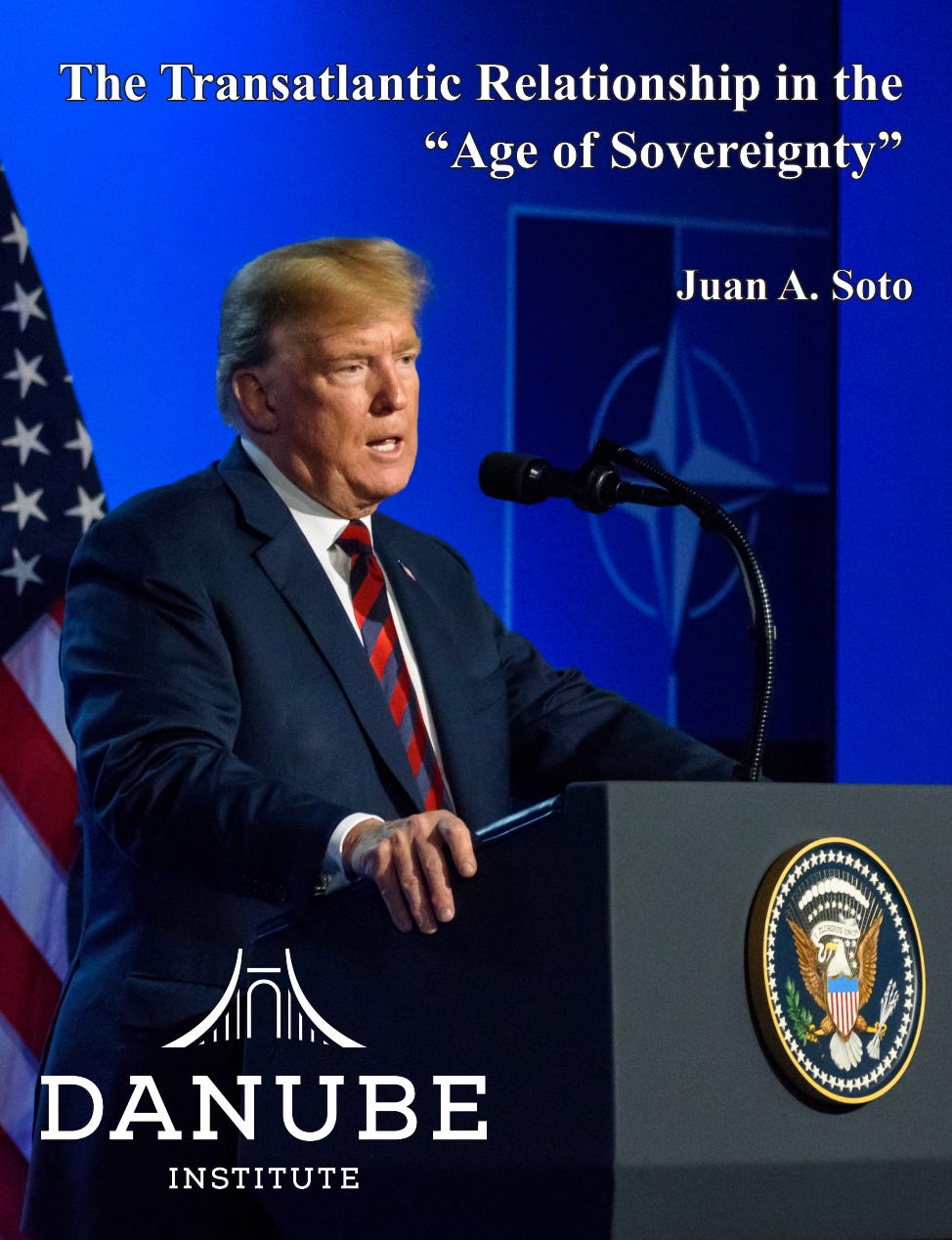
Journalism is ‘the first draft of history’, but sometimes you want the historians to draft a bit quicker too. Over the past couple of years, we have lived through a twice-a-century change in global geopolitics.
So it is to firming up the answer to ‘What just happened?’ that Juan A Soto turns in his latest paper.
He tracks the US Transactionalist/Multipolarity pivot down to a few crucial days, weeks and even hours: from CPAC 2025, to JD Vance’s Munich speech.
He tracks what that means at the level of policy, best summed up in the chapter header: The Structural American Red Line: No United States of Europe and No Eurasian Consolidation.
Then he sketches than five plausible futures for Europe on that basis. From total fragmentation to a rebalanced Atlanticism.
If these [Conservative populist] forces become more influential at the European level, their political priorities may not always align with American strategic preferences. In particular, tensions may emerge if the United States continues to pursue policies that effectively treat Europe as a strategic extension or operational theatre of American geopolitical competition with other powers. Under such circumstances, a more conservative European Parliament — while rhetorically sympathetic to transatlantic ties — might simultaneously seek to diversify Europe’s external partnerships, strengthening relations with other actors in order to safeguard European economic and strategic interests. Paradoxically, therefore, a more conservative European political landscape could produce two contrasting tendencies at once: a reaffirmation of civilisational Atlanticism alongside a stronger insistence on European strategic autonomy and even independence.
“A süket nem hall, a vak nem lát, de a bolond mindent megért."
The deaf don't hear, the blind don't see, but the fool understands everything. (Dunning-Kruger is real)