

Events This Week
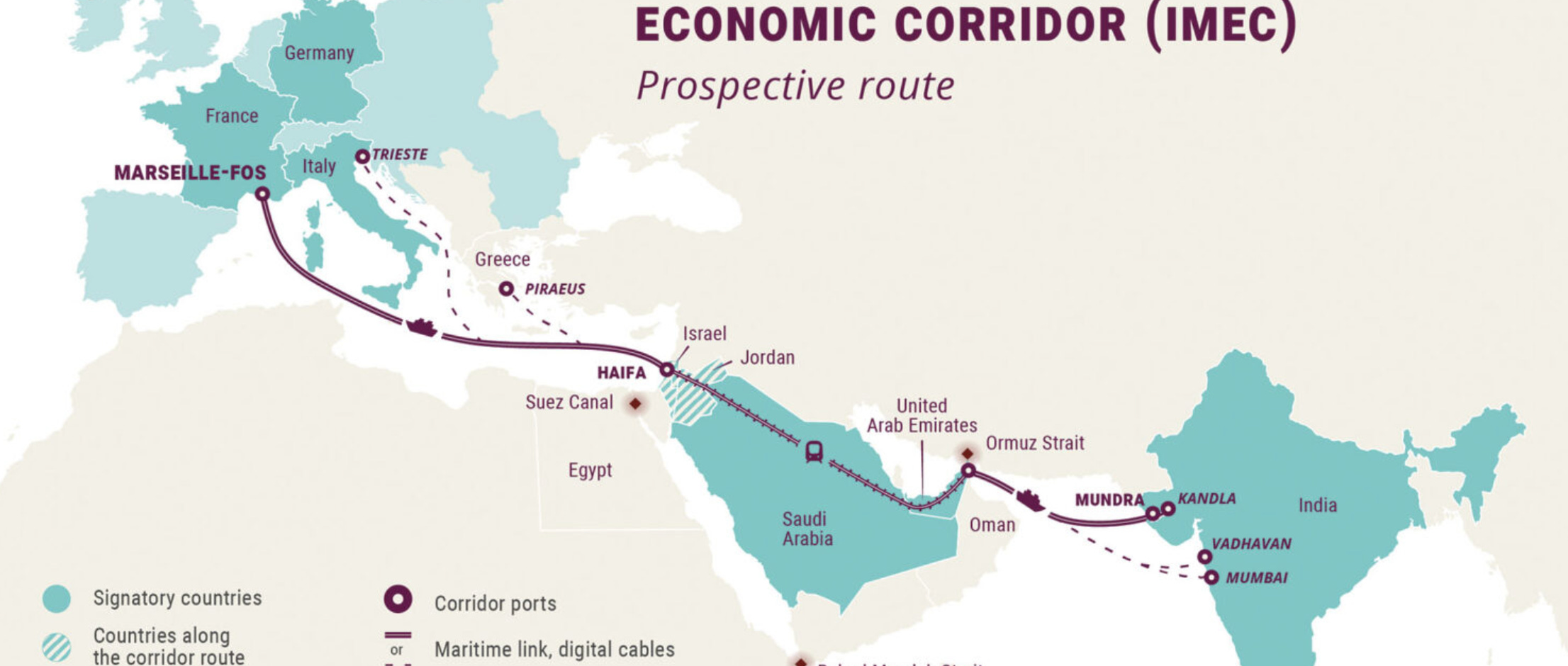
IMEC — the India Middle East Corridor — is the latest big piece to be laid on the geopolitical chessboard. The idea is that, as opposed to the Middle Corridor (through the Stans), or the Northern Corridor (Russia, aargh!), Eastern trade can take an easy route from India, bisecting Saudi Arabia, and turning up at Marseille and the Port of Trieste, en route for European distribution. It’s asserted that doing so would also shore up peace in the Middle East — via the proposed Israel link at Hafa.
Sadly, the old ‘no two countries with a McDonald’s have ever gone to war’ trope is now woefully out of date (Ukraine, Armenia, Serbia, Lebanon and Pakistan can all attest to that). Besides, even before WWI, a bestselling book, The Great Illusion, made much the same point about how better trade links would make German militarism impossible.
But whether IMEC is a security system, or simply a great way to shave $200 off the price of an aircon unit from Shenzen, Tuesday’s event: The Abraham Accords and IMEC — Securing the Future of the Middle East, promises to fill in some answers.
Kristof Veres, Sean Nottoli and Melissa O’Sullivan represent the DI.
They will be aided by Eugene Kontorovich, the funny, fast-talking analyst from George Mason University. And Orr Yisachar, long-time friend of the DI, who runs the David Institute in Jerusalem.
Kick-off is at 5PM, at the Villa.
Reserve your seats here:
https://danubeinstitute.hu/en/events/the-abraham-accords-and-imec-securing-the-future-of-the-middle-east
The great leftist bromide is that more migration is always positive. This is being tested to destruction right now by Britain’s Reform Party, who have announced that if elected they will house big migrant sites exclusively in areas that voted for leftist pro-migration parties. Understandably, there has been flappy consternation on that part of the political spectrum, as various right-on types attempt to spell out their horror without ever actually saying why they’re horrified.
No such double-talk at MCC, Thursday at 2PM, where they host Migration As A Weapon, a fascinating look at the human materiel of the 21st century.
From Belarus and Poland, to Morocco and Spain, to the ongoing threats of Erdogan, migration is leverage — and he who controls the chokepoint holds the cards.
Register here:
https://mcc.hu/en/event/2026-05-21-migration-as-a-weapon-power-pressure-and-politics-in-a-changing-world
Peter Slezkine is Director of the Russia Program at the Stimson Center.
He’s in Budapest for a Budapest Lecture, entitled: The Crisis of the Transatlantic Order: Where Is European Security Headed?.
More details here:
https://mcc.hu/en/event/2026-05-18-the-crisis-of-the-transatlantic-order-where-is-european-security-headed
Around Town
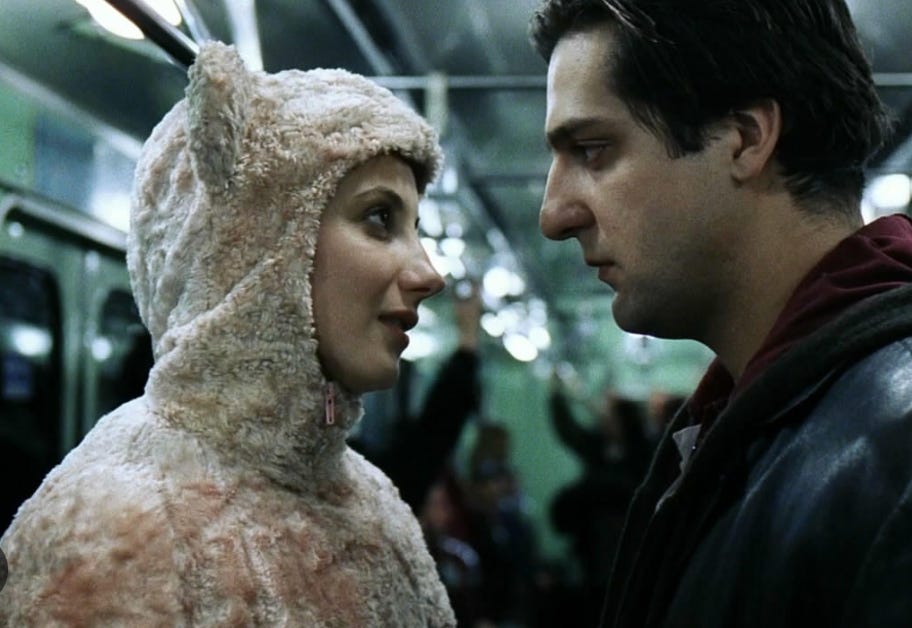
Kontroll is a classic Hungarian film, and very watchable. The 2003 sci-fi story of ticket inspectors on a futuristic Budapest Metro, it was written and directed by Nimród Antall, who went off to Hollywood after its success. It’s on at Bem Mózi, 6:30PM.

Farrokh Bulsara, the Zanzibar Indian better known to the world as Freddie Mercury, gained his distinctive overbite by being born with four extra incisors — a mouth like a flute, to which he later attributed his singing prowess. BiB’s interest in Freddie was rekindled recently by a viral video breaking down the dense harmonic layers of Bohemian Rhapsody. He is also the subject of a major new exhibition, hosted at the House of Music, which promises a deep dive into his short and never dull life: stage costumes, personal items, pieces of furniture and manuscripts.

Katsushika Hokusai is an artist best known for ‘the big wave’: real name Under the Wave off Kanagawa. He lived in the late 18th century, but his influence on Japanese popular art has persisted and pervaded. Hence a new exhibition at the Museum of Ethnography, called Manga – Hokusai – Manga, which traces how much of contemporary Japanese cartooning finds its roots in the master’s work.

In 1948, Robert Capa was already 35 years old, an American citizen, a recipient of the Medal of Freedom, John Steinbeck’s travel companion and collaborator on what would become A Russian Journal, when he returned home for the last time.
In the autumn of that year, he found himself back in Budapest for three months, wherein he took a sequence of photos that captured the country at a pivotal moment, between the ashes and the autocracy. The Capa Centre, up by Opera, is hosting a new exhibit of these shots.
Rod Dreher is leaving on a jet plane. At the end of the month, he’s moving to Alabama, to care for his ailing mother. Ahead of his departure, we sat down with the DI’s most well-known fellow to talk through his experience of five years in Hungary. What emerged was a touching personal portrait of the people and ideas that defined his time here.
It’s a bittersweet one for us. Rod has been fundamental to the DI’s identity: a strange and beguiling dinner companion, a far-sighted seer of the right, and a happy warrior in his everyday work. We’ll miss the overshares, and the kind words. Go well, Ray Oliver.
We missed Saddam’s Palace in 2003, so if you’re in the mood for damnatio memoriae, it might be worth taking a tour around the Karmelita, Viktor Orbán’s former Prime Ministerial residence. Like many historic dictators, Vik simply hired some moving men and left when his mandate was up. The former nunnery has since been opened up to the public by gracious and humble new overlord Péter Magyar (who has instead decided to live in a portakabin opposite KFC, Széll Kalman tér). Guided tours took place last weekend, and there may be some more coming up. All together now: “The regime’s decadence was a crime against the people!”.
Meanwhile, as the old guard falls away, Nick Thorpe has been profiling one of the oldest and guard-iest, Zsolt Németh, former head of the parliamentary Foreign Affairs Committee, and a Fidesz founder. Nick, an ex-BBC journalist who has been in town since the late 80s, has a very clear-eyed view of the place and its present upheavals.

Paper of the Week
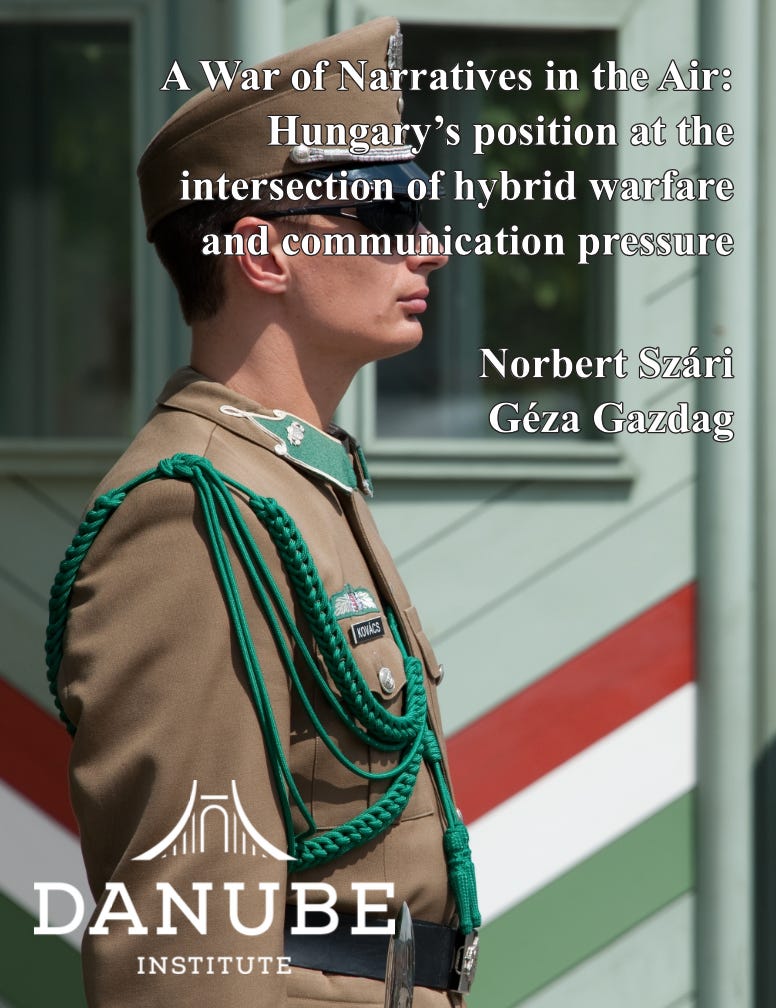
A War of Narratives in the Air: Hungary’s position at the intersection of hybrid warfare and communication pressure
Norbert Szári and Géza Gazdag
Hybrid warfare is a worryingly recent term. It only comes into the lexicon after Russia’s 2008 attack on Georgia, and only really develops common currency after the 2014 Ukraine offensive — remember the ‘little green men’? In brief, it is plausibly deniable warfare. Messing with stuff. A definition that could take in scrambling the control systems at Heathrow, or floating barrage balloons over the Estonian border. Increasingly, war is ambient: it is the leveraging of power to weaken and to push broader goals.
Hungary appears to have had its share of hybrid war lately — and the authors of our worrying new paper pick out one aspect: three mysterious drone incidents in the Carpathian region. One involving a Hungarian drone, the others drones of foreign origin. None ever truly ‘solved’.
Airspace-related incidents become particularly sensitive issues in this environment. When Hungary refers to the lack of technical evidence or adopts a cautious stance regarding a given case, some actors interpret this as if it were relativising the danger or weakening the alliance narrative.
Yet the essence of the Hungarian approach is precisely realist differentiation: as long as it has not been proven that a drone or aircraft is the result of deliberate state action, the incident cannot be classified as aggression but at most as a security risk. For Hungary, therefore, the greatest challenge is not physically defending its airspace – for which a modern, NATO-integrated system is available – but remaining independent in the narrative space. In this sense,
Hungarian strategic culture undertakes a dual task: it adheres to an evidence-based security-policy logic and seeks to prevent its sovereignty – in communicative or political terms – from dissolving in the current generated by wartime rhetoric.
Ha nincs ló, jó a szamár is.
If there is no horse, a donkey will do as well.