

Events This Week

As we've all been made aware since the collapse of USAID, international aid is no longer sacks of wheat with a red cross tossed into dusty marketplaces from flatbed trucks. It is litigation and activist-training, LGBTQ+ and DEI. It is sock-puppet NGOs, influence networks, and soft power with hard objectives.

On Tuesday, all day, the DI is hosting a conference on The Politicisation of Aid.

This one features UnHerd journalist Thomas Fazi, Man of Mystery Nicholas Naquin (once a soldier in the French Foreign legion), and Hungary's somewhat uniquely titled government minister: Tristan Azbej, the Secretary of State for the Aid of Persecuted Christians. Starts at 9AM at the Villa.
Then, on Thursday, the second half of another mad week (we're reliably informed there is an election soonish), Green Promises, Grey Realities - about the EU's rather fanciful green energy transition, and its rather flimsy results. An evening panel, led by our very own Research Fellow, Matyás Vajda.
Things are no less full-on down at the MCC, with Dr Max Otte, Germany's version of 'the economist who predicted the 2008 crash'. Otte will be bringing the curtain up on a lecture series he's running in the Spring, in conjunction with the HIIA, on competitiveness. 5PM at MCC Scruton.
Thursday, 9AM - 2PM, MCC's Centre for European Studies has got it in for the Court of Justice of the European Union (CJEU) - not to be confused with the ECHR (Britain's bête noire), or indeed the ECJ (trade and national government stuff). The ever-entertaining Rodrigo Ballester leads the caper, alongside János Bóka, Hungary's Minister of European Affairs.
Around Town
Perspectives and people from the week
We have a lesser-seen, much-admired fellow in the depths of the DI's research team. Dr Sumantra Maitra, Director of Research at the American Ideas Institute, whose main focus is on great power strategies.

This week, Sumantra was outed by Politico as the brains behind Trump's NATO strategy. The story is this: in 2024, Maitra authored a much-circulated essay in Foreign Affairs, laying out what he called a 'Dormant NATO' strategy. In this reckoning, the US goal would be to get Europe much more engaged with the NATO project, thereby leaving America as a mere nightwatchman - there to step in should all hell break loose. As Sumantra puts it: "I may hate my neighbour, but if his house is on fire I'll still put it out." He was interviewed on the idea by POLITICO here.
Meanwhile, Research Director Calum Nicholson got himself on the 196 Podcast, in an episode entitled Crossing The Danube With Calum Nicholson. Presumably a homage to the legendary punk rock record Crossing The Red Sea with The Adverts.
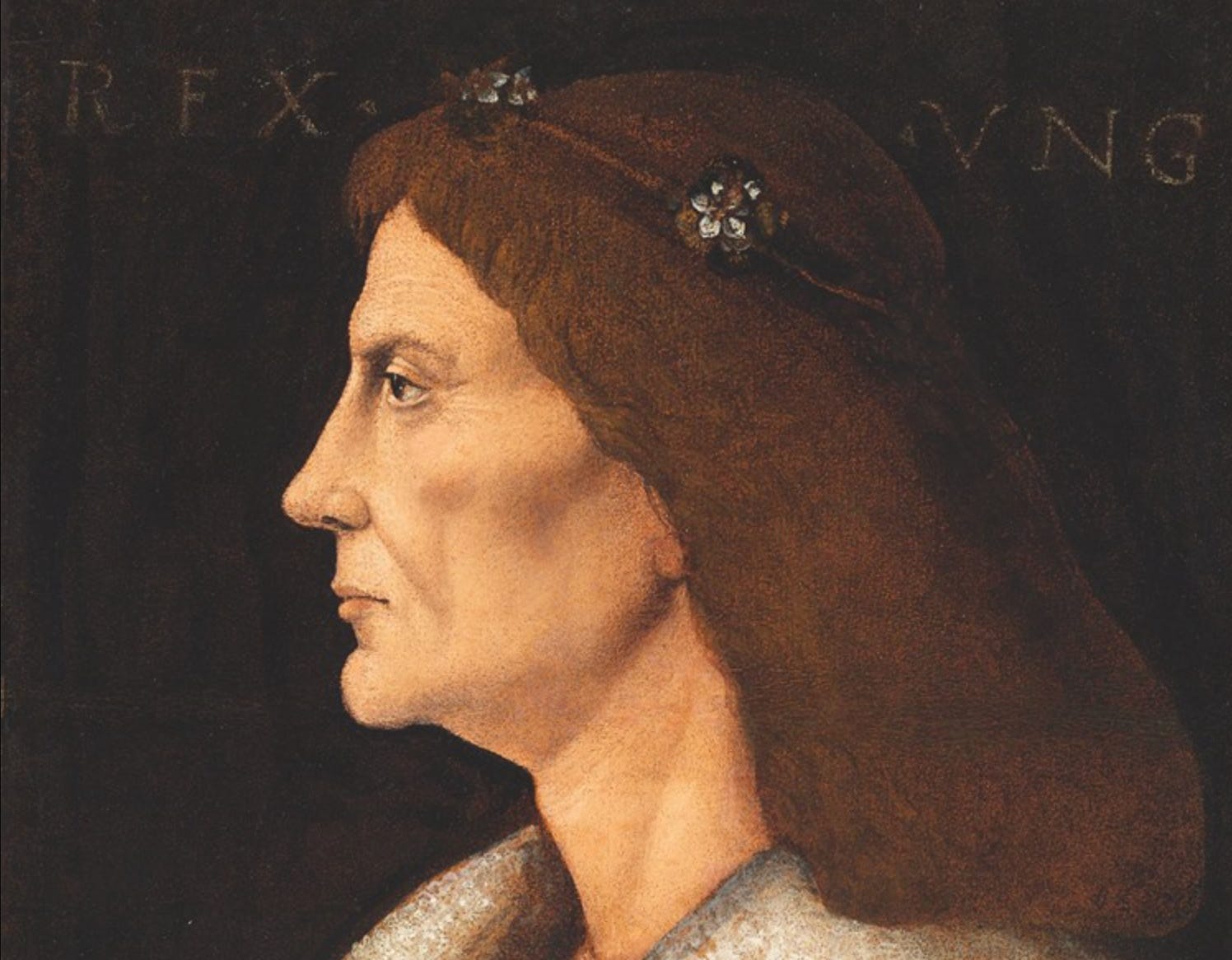
Have you celebrated King Matthias lately? Fear not. Next Saturday, February 28, on the anniversary of his birth, there will be a medieval fete at Buda Castle, with musical performances, armaments, adventure games, and much else.

Fascinating piece on the HuCon this week, by the bullet-shaped military specialist on the DI's research team, Norbert Szári.

Norbs has been researching the role of video games as a training and activation system on the frontlines of the Ukraine War. It has long been lore that the best gamers are snapped up to operate drones and remote weapons systems. Indeed, the trend was foreshadowed by Buster Bluth in a vintage episode of Arrested Development, over 10 years ago.

On the Ukrainian side:

One pilot, 29-year-old Oleksandr Dakhno from the 47th Separate Mechanized Brigade—a former avid gamer—claims to have eliminated around 300 Russian soldiers in 18 months, using FPV drones to deliver explosives with sniper-like precision over artillery distances.

Meanwhile, in Russia:

Programmes recruit minors as young as 13 into tech contests and platforms for drone design and coding, engaging over 600,000 users and offering incentives like exam points.

A chilling look into a sci-fi future already with us.
Is Europe Doomed? Find out with Raymond Ibrahim, the DI's most mesomorphic fellow, who was interviewed by The Sun's political editor, Harry Cole.
The MCC Film Club screening this month is The Fifth Seal (Az ötödik pecsét, 1976) directed by Zoltán Fábri, a Hungarian drama set in 1944 Budapest, during the Arrow Cross terror.

Not a sequel to The Seventh Seal, Ingmar Bergman's Death-plays-chess snorefest. This evening, 6PM-9PM, Kino Café Cinema. English subtitles.
As we shudder through the dying breaths of winter, it may finally be time to cast our eyes forward. To Spring. A time for houseplants. Based In Budapest still shudders at the time we accidentally X'ed an innocent ficus with a spray bottle that happened to contain bleach. It took a week to die, shedding leaves every morning like a cancer patient's hair. Take professional advice. Go to the houseplant fair. 12-6 next Sunday at Pilea Projekt.

Paper of the Week
A River Runs Through It: The Danube River in Hungarian Strategy and Identity

One top fact about the Danube is that Johan Strauss II never actually saw it before he wrote the waltz that bears its name. As anyone exiting Pest will confirm, it is slate-green, the colour of turtle soup. It does, however, extend between two blacks: The Black Forest in Germany, and the Black Sea, in Romania.

In their latest paper, three Hungarian fellows, Gergely Szűcs, Dániel Farkas and Balint Binder, take on Hungary's defining waterway at the level of history and geopolitics, concluding that it remains under-used: taking approximately half as much freight annually as the Rhine - and no one ever wrote a good song about the Rhine.  Rhine-to-Five? Doesn't work.
“In summary, the late-20th/early 21st-century vision is to transform the Danube into a freely navigable, multimodal corridor matching Northern Europe’s inland waterways. For Hungary, this represents an opportunity: a fully upgraded Danube corridor could restore some of the country’s old role as an exporter of its agricultural and manufactured goods, now under EU conditions. It also means that Hungary could serve as the hub of a broad logistics network, linking Black Sea and Adriatic ports to Central European markets."
Comings & Goings
Coming:
Zoltán Egeresi
Zoltán is a Turkic-world watcher, now part of our growing Turkic world team. It was he who made us aware this week of something called the Great Kurultáj. Every August, thousands of Huns of every description descend on the Hungarian town of Bugacs to practice the old folkways, up to and including the goat-carcass polo known as kokpar (buzkashi). No word on whether Zoltán is a participant, but we do know he loves to cycle.
Going:
Markus Johannson-Martis
Finally, after six months, Markus is back off to Sweden. A legal scholar and advisor to the Sweden Democrats, Markus has been one of our most doughty and committed fellows, famous for his Pomodoro self-pummellings. What will the office look like at 8:30AM now? Without Markus, no one will know. He leaves an impressive body of work, capped by his excellent Beautiful Cities Matter event last week. We wish him and his charming fiancée Isabella all happiness in their future life together.
Dates For Your Diary
Christian Revival Conference, Oxford — 11 -12 MarchCPAC Hungary — 21 March"Az egyik kutya, másik eb."
— One is a dog the other a hound. (They are both the same regardless of what they say, equally bad)