

Budapest This Week
If it's December 3, Wednesday, 5PM, then it must be time for a panel discussion. Get your fix of inter-personal blather at The Middle East: Is Peace Possible? in the Scruton Café, MCC.
Then, on Thursday at 2PM, MCC are hosting a panel discussion on the recent remigration trend, called 180-Degree Turn? Changing Immigration Policies from the UK to Germany. It's at the Hunyadi János Hall, Tas Vezér utca, and features Robert Bates, Research Director at the Centre for Migration Control. Register here.
Meanwhile, the Danube Institute is very much looking forward to finding out: Is Liberalism A Threat To Religious Liberty?, at 5:30PM on Wednesday. This one stars Philip Pilkington, with co-panellists Andrew Koppelman, a US law professor, and Jacob Williams, an Oxford philosophy doctoral candidate. Register here.
The Brussels bubble is finally about to pop: MCC Brussels' Battle for the Soul of Europe is on 3 and 4 December (Wednesday and Thursday). It features the likes of Balázs Orbán, Matt Goodwin, Claire Fox, Patrick Deneen, Miriam Cates, and all the Frank Furedi you can eat. Full details here.
Calum Nicholson, of this parish, will also be giving a separate chat at the Liszt Institute Brussels on Tuesday, 7:30PM, alongside a very beautiful and hard-won roll-up banner. Come for the talk; stay for the printed backdrop.
What’s Based

Chat Control and the Battle for Privacy
For years, Brussels has sought to build a safety-first internet, with privacy and 'rights' for all users (eg GDPR), while simultaneously reserving the right to read everyone's messages.

Now, the chief part of their new privacy-busting regime, their CSAR legislation (dubbed 'Chat Control' by its foes), is returning to the EU Parliament once again, after several setbacks.
Here's what you need to know:
1 — CSAR stands for Child Sexual Abuse Regulation. From 2019 onwards, companies like Microsoft and Meta voluntarily scanned photos for child abuse images.
2 — They did this despite the EU's ePrivacy directive, via a temporary, time-limited opt-out. This was due to expire in 2024, so Brussels decided to make the opt-out mandatory and formal.
3 — The CSAR was based on the idea of 'client-side scanning'. Modern encryption is effectively unbreakable, so the way through was a separate surveillance node on your phone, that could independently rifle through WhatsApps, Signal chats, and photos.
4 — An original version of the bill was effectively torpedoed last year after it was discovered that an online campaign in favour of the legislation broke EU law. Adverts posted on X by the Commission actively targeted wavering voters using sensitive personal information, which is very much illegal under GDPR.
5 — Brussels is attempting to relaunch it by claiming that the new version is 'voluntary' for digital firms. But critics have warned that this is the thin end of the wedge, and that formerly 'voluntary' measures passed by the Commission frequently become mandatory when Eurocrats become annoyed at lack of uptake.

Expect more news in the coming weeks, with negotiations likely to begin early next year.Other News
'Visit Hungary at Christmas: no illegal migrants' - the country's controversial new tourism campaign
Paper of the Week
The Hungarian Revolution of 1956: Dissent and the Cracks in Soviet Power
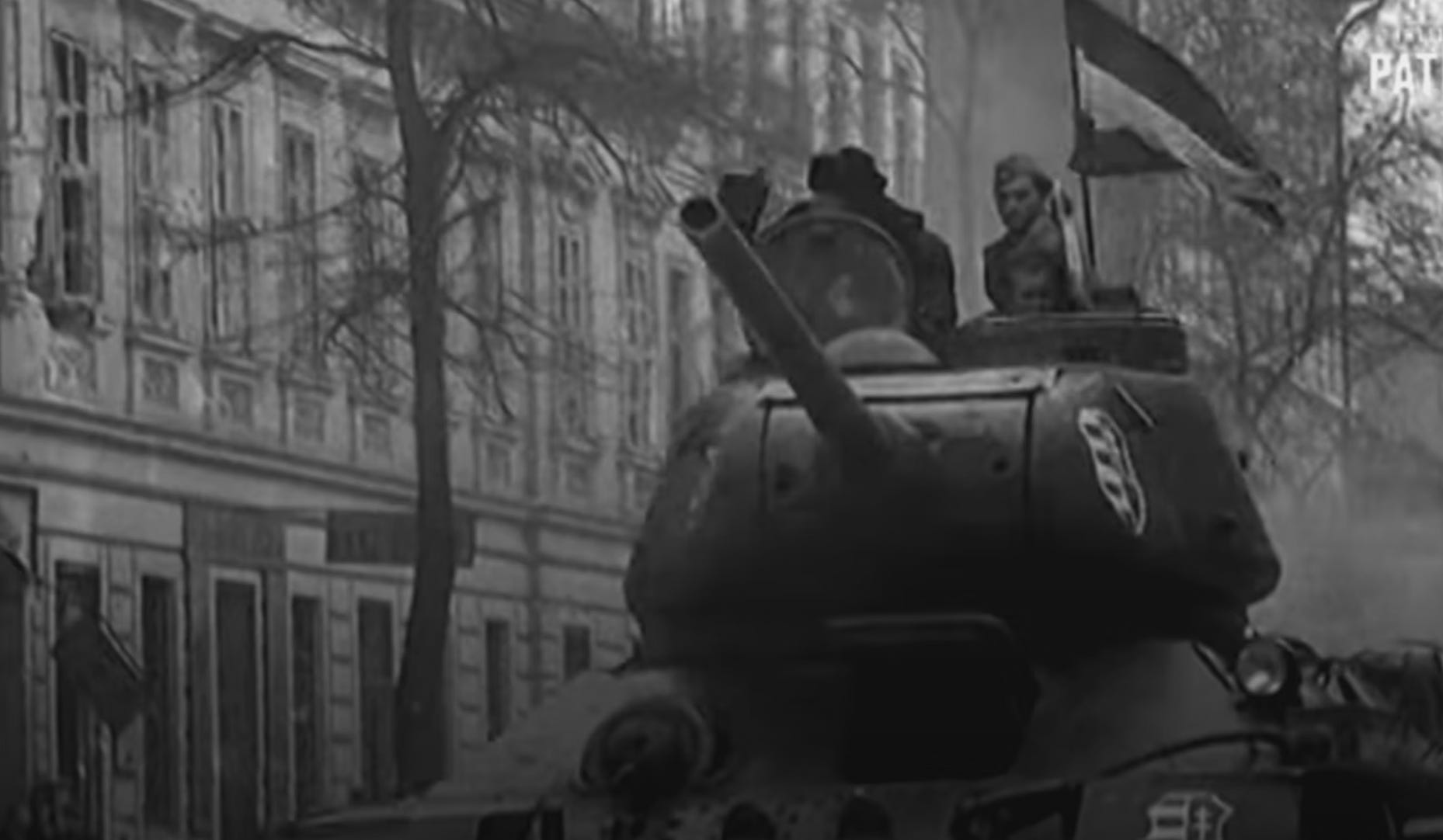
Dr Bernd Ströhm works for the Vienna Institute for International Economic Studies and is a Visiting Fellow at the DI, where he has recently finished up a paper tracing the aftershocks of the 1956 Revolution.

He charts how the revolution's echoes of 1848 resonated with Hungarian psychology, and how the global Socialist movement gradually came to terms with what had happened. Across the world, the evil of the Soviet empire now had to be reckoned with, even for those who still believed in Communism.

Meanwhile, inside the country, a new culture of samizdat and quiet defiance gave its flavour to the defiance in Czechoslovakia, and the disquiet in the Polish shipyards.
"The impact of the 1956 Hungarian Revolution on the left intelligentsia in France was evident in the reaction of Jean-Paul Sartre, a French philosopher and a key figure in French Marxism. After 1956, his views on Stalinism were torn. On 9 November 1956, he gave an interview with the news magazine L’Express in which he denounced the Soviet intervention, even declaring that he would break off relations with Soviet writers who failed to denounce it.

In his interview, he argued that the Soviet claim of “saving socialism in Hungary” was misleading. True socialism in Hungary would have survived on its own; the Red Army’s intervention was however not about helping Hungarians but about protecting the interests and security of power-holders in the Soviet Union."
Eyes & Ears
Comings & Goings
Coming:
Jacob Williams is becoming a frequent visitor to the city. He's presently pursuing his D.Phil at Oxford in post-liberal thought, so it's obvious why he's attracted to this particular beehive. He's also a thoroughly urbane bloke, who has survived the three pint test with the DI crew. He is interested in making deeper connections in the city - do help him out.
City Life
DI fellow Adam LeBor's book, The Last Days Of Budapest is a fantastic narrative re-telling of the dog days of the Second World War in the city. It's been widely fêted, a Sunday Times Book of the Week, most recently turning up as one of The Economist's Books of the Year.

Tomorrow, Tuesday, from 5:30, Adam will be launching the paperback edition in town, at Bestsellers book shop (Oktober 6 utca). Come down for wine and pogacsas. Adam says there will also be: "an intro to the book, reading, questions, then drinks and mingling". Mingling certainly sounds exciting.
Tonight, the Duna String Orchestra perform at St Matthias Church.
Fans of thumping 2000s alt-rock can appreciate The Subways on Wednesday at Dürer Kert, from 7PM.
Stone armour, a four-horse open chariot, ten terracotta warriors: this week, a major new exhibition opens at the Museum of Fine Art (Heroes Square). The Civilisation of the Qin and Han Dynasties – The First Chinese Emperor’s Terracotta Warriors showcases ancient China in its full imperial glory, with over 150 items on display. Tickets are 6800 Ft.
Dates For Your Diary
WEF Summit at Davos — 19 JanuaryWiener Akademikerball, Vienna — 20 February “Miért itatod az egereket?"— “Why are you giving drinks to the mice?” (Why are you crying?)