

Events This Week
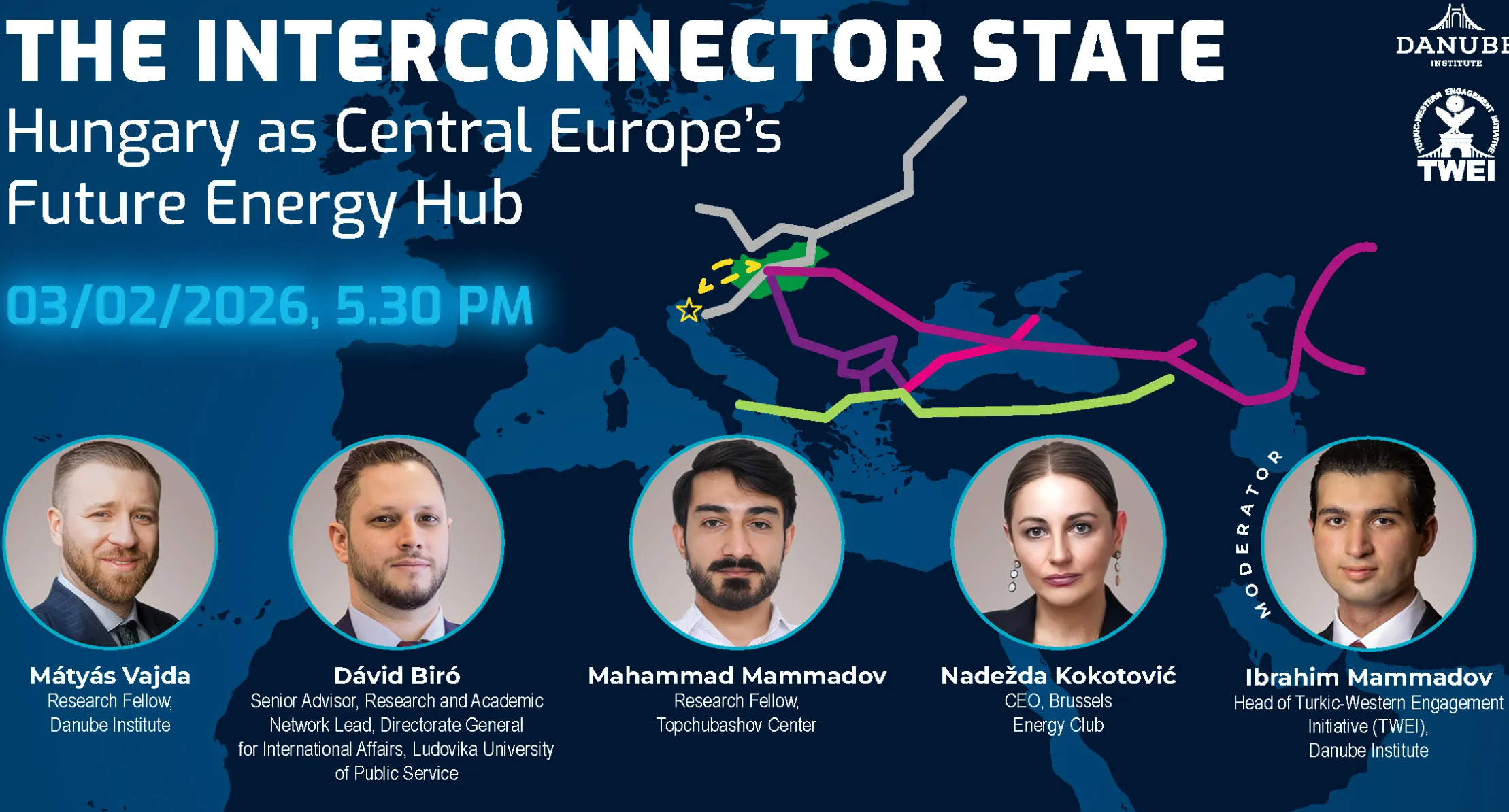
Busy week at the Institute. Tuesday it's time for The Interconnector State: Hungary as Central Europe’s Future Energy Hub. In essence a discussion of how the old liberal saw of ‘Hungary is taking Putin’s gas’ will be finally put to bed by the end of the decade. The Black Sea Submarine Cable project, a Kazakh energy terminal, and the port at Trieste: all mean that Hungary will not only be less reliant on Russia, but will in turn become its own hub for the rest of the continent. Presumably sparking future quandaries over whether pure-blood liberals should take Hungary’s gas. 5:30PM at the Villa.
Then, Thursday sees The Hidden Price Tag, a discussion of the cost of the Ukraine Peace, based on the leaked Prosperity Framework dossier: turns out the EU is lining up an $800 billion reconstruction package, plus fast track EU membership. Philip Pilkington would like to beg their pardon. He’ll be joined by the always excellent Rodrigo Ballester, and our very own Deputy Director of Research, Péter Szitás. 5:30PM at the Villa.
Lots of talking Turkic this week. Ludovika is running an afternoon-evening conference on the ever-pressing matter of Security Issues and Military Cooperation in the Turkic World. Thursday, 4PM till 8PM.
Then on Thursday at 5PM, those interested in how babies are made should head down to MCC, where Clara Muzzio, Deputy Chief of Government of the City of Buenos Aires will explain all — in dialogue with local experts. That’s: Exporting the Hungarian Model? Family Policies to Tackle Argentina’s Population Challenge.
Around Town
Perspectives and people from the week

When did you last write in cursive? Based In Budapest recalls many unhappy hours at school with double-lined notebooks, dabbing the quill in the ink pot; yet today only writes in blocky print, perhaps because that cursive fell so far into disrepair.

Gergely Szũcs is one of our newest Hungarian fellows — and he has the script of an angel, or at least a 19th Century bank clerk. In his new piece for the HuCon, he explores the rise and fall of cursive, arguing that its national particularity has implications for conservatives.
The grand halls of the Anantara New York Palace Budapest play host to the 9th Indoor Beer Festival this weekend. The event will provide nearly 100 drafts on tap; and, should you sample all 100, plenty of floor space.
It's Chinese New Year. Late as ever. Downtown Saturday and Sunday.

It’s thirty years since Mónika Lakatos first burst onto the Hungarian music scene via a TV talent show: Ki Mit Tud? (‘Who Can Do What?’) Not only has the naming of Hungarian talent shows improved in that time, Mónika herself has become a force in the culture, using her voice to bring Roma folk to national and international audiences. At Müpa, she is hosting a thirty year retrospective of her career. Thursday at 7:30PM.
Last week, Father Mario Portella sat down with the podcast team to talk about the post-Greenland world and what he calls the ‘transactional mode’ of US foreign policy - as distinct from the post-1945 and post-1990 modes of ‘nation building’. Forget the soft stuff, he says: America is at its best when it functions like a corporation with nuclear weapons.
Master of the Dark Arts (Oxon.) Carlos Roa is back, swooping down from his DC belfry with another high-level analysis on The Big Questions. This time, Venezuela. After Donald Trump’s heavies had tagged and bagged Maduro, the matter seemed to fall from the international agenda, presumably because no one could think of the next step. Where are the oil partnerships? How can Trump drink Maduro’s milkshake? Enter Carlos, who proposes establishing a Caracas Economic Development Zone (CEDZ), modelled on the Dubai International Financial Centre. Grants, special tax rates, international policing.
Paper of the Week
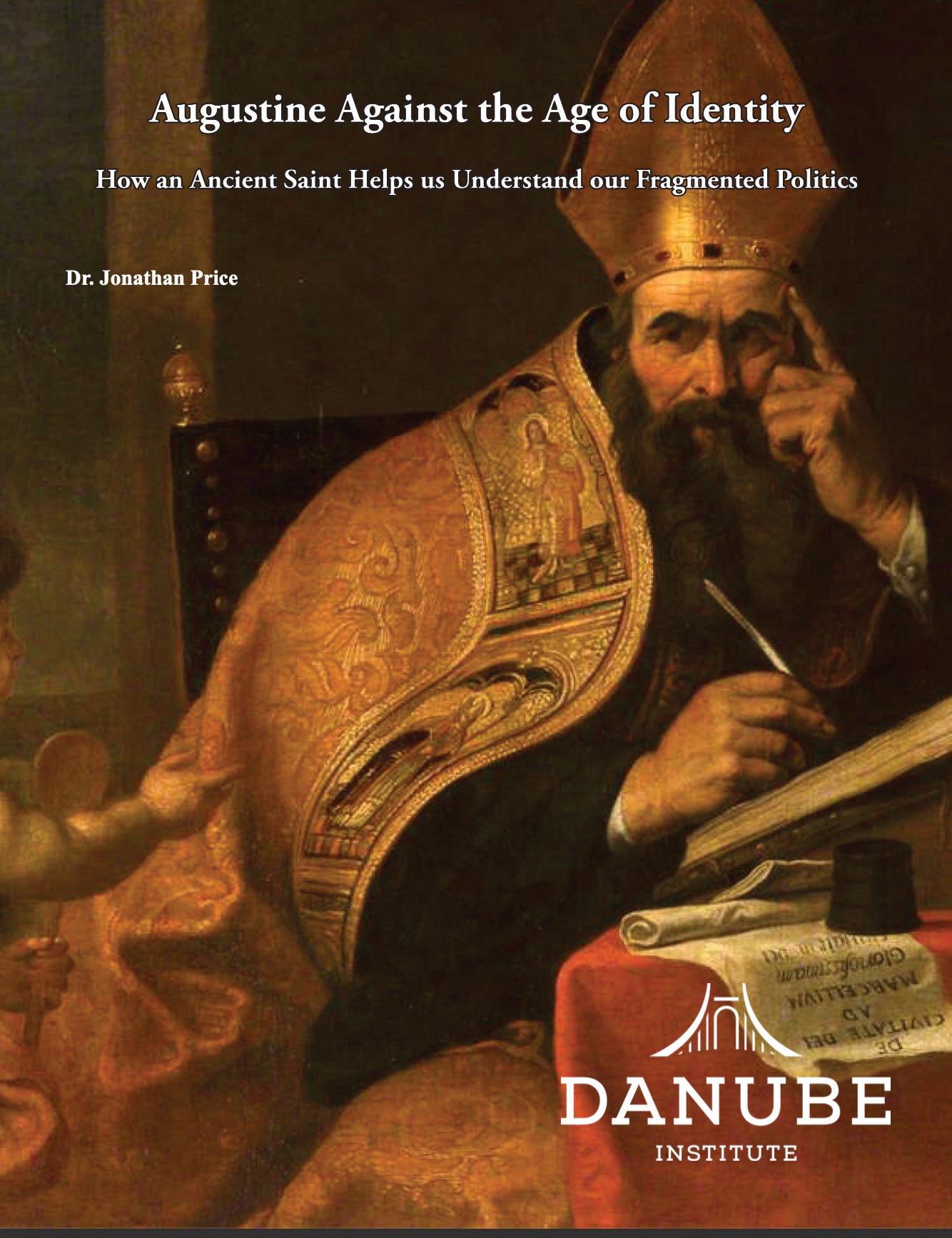
Augustine Against the Age of Identity - How an Ancient Saint Helps us Understand our Fragmented Politics
Was St Augustine woke?

After all, he cared about the poor, he criticised empire, and he universalised moral worth.

Not at all, says Dr Jonathan Price (well placed to comment, as a Theology Don at Oxford): St Augustine is Based. In fact, to understand his conception of love is the key to unlocking the Chinese handcuffs of bad Christian theology, and bad living.

Pace Jonathan, since the 90s, human rights culture has moved towards an abstruse sense of what it is to love our fellows. It stems from the belief that we are all ‘the same’: that there is a single inert gas of humanity, shovelled into different vessels. But this conception erases the very stuff we love: particularity.

Modern identity politics takes this one step further: we are not only all the same stuff, but we somehow also have innate aspects that are sacred to us. Which means are encouraged to see ourselves as both morally interchangeable and subjectively unknowable.

As Dr Jonathan points out, this is a recipe for hell - man as an island: “But when interiority is oriented toward something higher than the self—toward truth, God, the shared good—then social life becomes coherent again. Unity forms around what citizens mutually love, not around what they privately demand.”

Well, we mutually love this piece. But we’re not above privately demanding it.
Seen through Augustine’s eyes, the task for CEE is not to reject either universal ideals or particular identities, but to find a way of binding them together through shared loves that both transcend and include the local. In this respect, Augustine’s thought provides not a blueprint but a compass.

It reminds us that a flourishing society requires neither ideological homogeneity nor a marketplace of competing identities, but a coherent vision of the good around which citizens can rally. Without such shared loves, political lifebecomes a contest of isolated inwardnesses; with them, it becomes a genuine commonwealth.
Comings & Goings
Coming:
Three incomers this week for MCC:

Samuel Trizuljak — a junior lecturer at Kolégium Antona Neuwirtha.
Marco Crivellaro — an Italian Doctor of Philosophy.
Tsega Gebrekristos Mezgebo — Assistant Professor at the Ethiopian Civil Service University.
Dates For Your Diary
Budapest Global Dialogue — 9 - 10 FebruaryMunich Security Conference — 13 - 15 February “Nem hajt a tatár"— The Tatar is not chasing us (no rush)